Building Your Virtual Bookkeeping Business
Why Bookkeepers Are Essential to Every Business

Bookkeepers are the financial backbone of every business, responsible for recording and maintaining the daily financial transactions that keep companies running. Whether you're a creative entrepreneur looking to hire help, considering bookkeeping as a career, or starting your own virtual bookkeeping business, understanding this role is the first step toward financial clarity.
What You Need to Know About Bookkeepers:
- Primary Role: Record and classify all financial transactions.
- Key Tasks: Accounts payable/receivable, bank reconciliation, payroll, and financial reporting.
- Not the Same as Accountants: Bookkeepers handle daily data entry; accountants analyze that data for strategic advice.
- Service Options: In-house employees, freelance contractors, or virtual bookkeeping services.
- Career Path: Can progress to accounting technician, accountant (with further education), or self-employment.
The bookkeeping profession has evolved from manual ledgers to cloud-based software and automation. Modern bookkeepers are tech-savvy professionals who ensure data accuracy, allowing business owners to focus on their core operations.
For creative entrepreneurs, bookkeeping can feel time-consuming and stressful. However, accurate financial records are crucial for managing cash flow, preparing for tax season, and making informed business decisions. Understanding what bookkeepers do is essential to building a sustainable creative business.
This guide explores everything from foundational bookkeeping methods to modern service models, career opportunities, and how to build your own virtual bookkeeping business.
The What & Why: Understanding the Role of a Bookkeeper
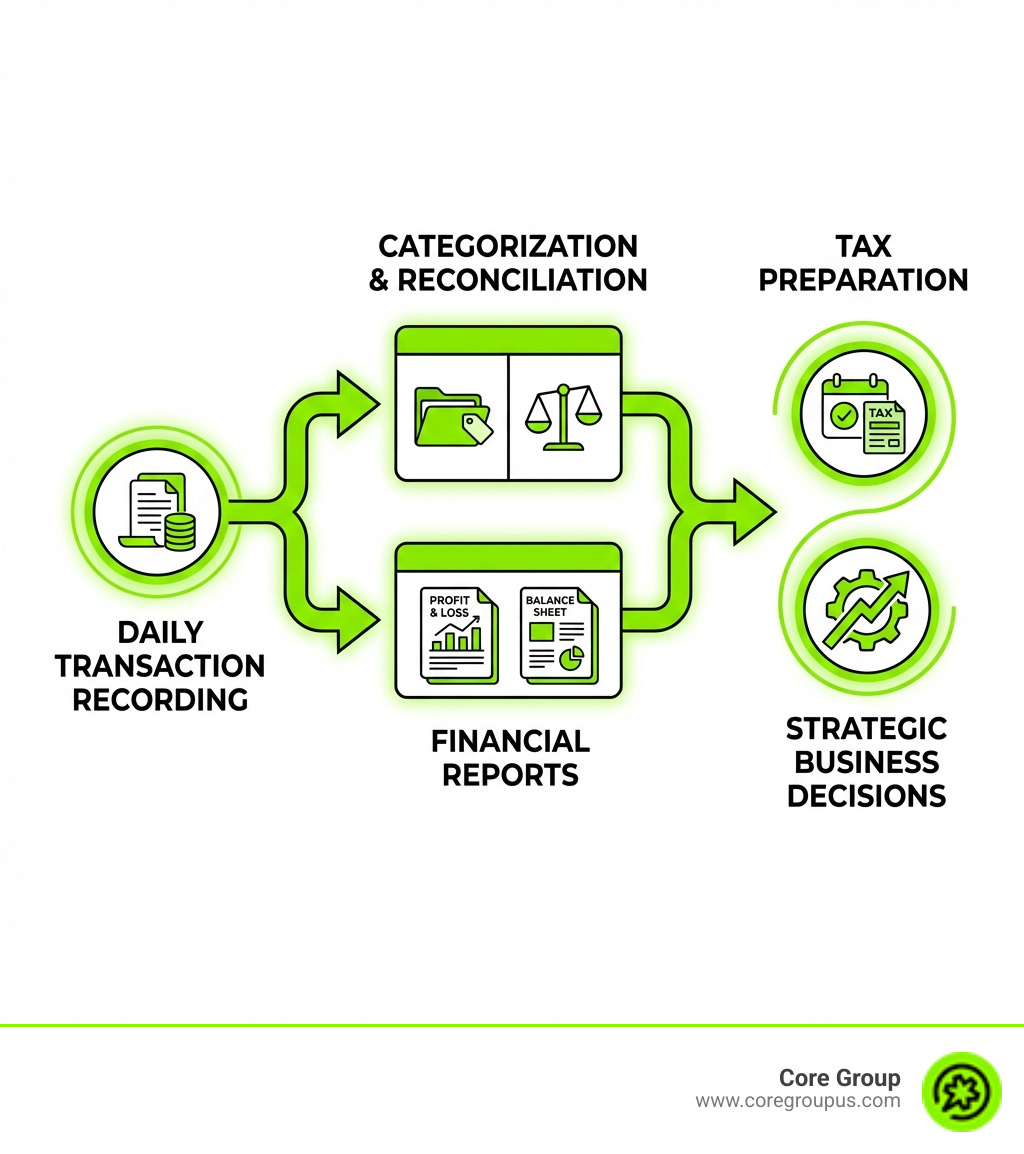
A bookkeeper is the meticulous guardian of a company's financial records. They are responsible for the day-to-day recording, classifying, and reconciling of every financial transaction, ensuring the data is accurate and up-to-date. This foundational work is crucial for sound financial management, compliance, and strategic decision-making. Bookkeeping is the recording of financial transactions, and is part of the broader process of accounting.
What Does a Bookkeeper Actually Do?
At its core, bookkeeping is about maintaining a complete and accurate set of books. The person employed to perform these functions is typically called a bookkeeper, and they handle the flow of money in and out of a business.
Their daily tasks are varied and essential:
- Daily transaction recording: Documenting all financial events, whether cash or credit, into appropriate journals or daybooks.
- Accounts payable: Managing what the business owes to its suppliers and vendors and ensuring timely payments.
- Accounts receivable: Tracking money owed to the business by customers, sending invoices, and following up on overdue payments.
- Bank reconciliation: Comparing the business's bank statements with its internal records to catch any discrepancies or errors.
- Payroll processing: Calculating employee wages, including overtime and bonuses, while ensuring compliance with tax regulations. For more on this, check out our insights on HR and Payroll for Small Business.
- Preparing initial financial statements: Bookkeepers often prepare the groundwork for financial statements, bringing the books to the trial balance stage.
- Record-keeping: Organizing and maintaining all source documents—receipts, invoices, bank statements—for future reference and audits.
Essentially, bookkeepers provide the accounting services that track expenses and income, helping businesses keep accurate records and monitor accounts to maximize available cash.
The Key Differences Between Bookkeepers and Accountants
It's common to use the terms "bookkeeper" and "accountant" interchangeably, but they represent distinct roles. Think of it this way: a bookkeeper lays the bricks, while an accountant designs the building.
Here's a breakdown of their primary differences:
| Feature | Bookkeeper | Accountant |
|---|---|---|
| Focus | Recording historical data | Analyzing and interpreting data |
| Tasks | Daily data entry, reconciliation, payroll, invoicing | Tax planning, financial analysis, auditing, strategic advice |
| Role | Creates the books, clerical work | Uses the books for strategic advice, higher-level analysis |
| Frequency | Daily, weekly, or monthly transactional work | Monthly, quarterly, or annual analysis and reporting |
Bookkeepers are concerned with the accurate recording of financial transactions. Accountants take the data provided by bookkeepers and use it for higher-level functions, including preparing comprehensive financial statements, offering tax planning strategies, and providing strategic financial advice.
Both roles are crucial and often collaborate. In smaller businesses, a bookkeeper might handle daily tasks and then hand the data to an accountant for year-end tax preparation. For a deeper dive, explore our Accounting services.
Top Advantages of Hiring a Bookkeeper for Your Business
For many business owners, especially creative entrepreneurs, managing finances is daunting. Hiring a skilled bookkeeper can transform this burden into a powerful asset.
Here are some key benefits:
- Time Savings: A bookkeeper takes over time-consuming financial tasks, freeing you to focus on your core business activities—creating, innovating, and serving clients.
- Improved Cash Flow Management: By tracking accounts receivable and payable, bookkeepers help you monitor cash balances and upcoming expenses, warning you of potential shortfalls.
- Accurate Financial Data for Decision-Making: Clean, up-to-date financial records give you a clear picture of your business's health, empowering you to make informed decisions about investments, pricing, and growth.
- Stress-Free Tax Season Preparation: A good bookkeeper keeps your records in order year-round, making tax time smoother and less stressful. This preparation is a cornerstone of effective Tax Planning.
- Scalability: As your business grows, a bookkeeper can handle the increasing financial complexity, allowing for sustainable growth without financial chaos.
- Error Reduction: Professional bookkeepers have the training to minimize mistakes, ensuring your financial data is precise and reliable.
- Compliance: Bookkeepers help ensure your financial practices meet federal, state, and local tax regulations, reducing the risk of penalties.
A skilled bookkeeper acts as a financial partner, providing the foundational accuracy needed for a "no-fluff, profit-first playbook" that allows creative entrepreneurs to thrive.
The How: Core Methods and Modern Service Models

Bookkeeping isn't a one-size-fits-all process. The methods and service models have evolved from paper ledgers to cloud-based platforms. Understanding these concepts helps businesses choose the right approach for their needs.
Foundational Bookkeeping Methods
The modern double-entry bookkeeping system was described by Luca Pacioli in 1494, but its history dates back thousands of years. Today, two primary systems and two main accounting methods are standard. For a look into its origins, you can read A brief history of accounting.
Single-Entry System: The simplest method, similar to a checkbook register. It tracks income and expenses in a single ledger, with each transaction recorded once. It's best for very small businesses or freelancers but provides a limited financial picture.
Double-Entry System: The standard for most businesses. Every transaction is recorded in at least two accounts (a debit and a credit), ensuring the accounting equation (Assets = Liabilities + Equity) always balances. This provides a comprehensive view of a business's financial health.
Beyond these systems are two main accounting methods:
Cash Basis Accounting: Records revenues when cash is received and expenses when cash is paid. It's simple and focuses on cash flow, making it suitable for small businesses. However, it can provide an incomplete picture of long-term performance.
Accrual Basis Accounting: Records income when earned and expenses when incurred, regardless of when cash changes hands. This method provides a more accurate long-term view of a company's financial performance and is required by GAAP for many businesses.
Types of Modern Bookkeeping Services
Technology has reshaped how bookkeeping services are delivered, giving businesses a range of options. Our services extend to specific regions like Bookkeeping and Tax Services New York.
In-House Bookkeepers: A full-time or part-time employee working on-site. This offers deep integration but comes with higher overhead costs (salary, benefits). Best for larger businesses with high-volume needs.
Freelance Bookkeepers: Independent contractors who serve multiple clients. This provides flexibility and is cost-effective, but they may have less day-to-day involvement. Ideal for small to medium-sized businesses.
Virtual Bookkeeping Services: A specialized form of freelance bookkeeping where all services are delivered remotely using cloud-based software. It's highly cost-effective and flexible, offering access to a global talent pool. This is our area of expertise at Core Group.
Full-Service Bookkeeping: A comprehensive solution covering all aspects of bookkeeping, from daily transactions to payroll and reporting. It can be delivered in-house, by a freelancer, or virtually. This is the best option for businesses wanting to completely offload financial record-keeping to experts.
The Who: A Career Profile of Professional Bookkeepers

The role of a bookkeeper has transformed from a data entry clerk to a tech-savvy financial professional. As technology automates routine tasks, modern bookkeepers focus on oversight, problem-solving, and ensuring the integrity of a company's financial systems.
Essential Skills and Qualifications for Modern Bookkeepers
To excel today, bookkeepers need a blend of traditional accounting knowledge and modern tech proficiency. While an associate degree is helpful, many employers value experience and certifications.
Here are the essential skills:
- Attention to Detail: Meticulousness is paramount to ensure accuracy in every transaction.
- Mathematical Aptitude: A strong grasp of basic math is fundamental for calculations and reconciliations.
- Tech-Savviness: Proficiency with accounting software (like QuickBooks or Xero) and spreadsheets is non-negotiable.
- Organizational Skills: The ability to manage a large volume of financial documents and data systematically is crucial.
- Communication: Bookkeepers must clearly explain financial information to clients or management.
- Integrity and Ethics: Handling sensitive financial information requires trustworthiness and high ethical standards.
- Problem-Solving: Critical thinking is needed to investigate and resolve discrepancies.
- Time Management: Managing multiple tasks and deadlines is essential, especially when serving several clients.
- Continuous Learning: A commitment to professional development keeps bookkeepers current with regulations and software.
The Impact of Technology on the Bookkeeping Profession
Technology has reshaped the role of bookkeepers into strategic financial partners. The days of manual ledger entries are being replaced by powerful digital tools.
- Accounting Software: Platforms like QuickBooks and Xero automate many routine tasks, from invoicing to bank reconciliations.
- Automation and AI: AI-powered tools can automatically categorize transactions and extract data from receipts, reducing manual data entry.
- Cloud Computing: Cloud-based solutions enable remote work and real-time collaboration, fueling the growth of virtual bookkeeping.
- Shift from Data Entry to Advisory: As technology handles transactional work, the bookkeeper's role evolves. They focus more on verifying accuracy, interpreting data, and providing insights to business owners. This is where we excel at Core Group, guiding creative entrepreneurs with a profit-first playbook.
- Improved Accuracy and Efficiency: Technology reduces human error and speeds up processes, leading to more accurate books and efficient workflows.
While automation is changing the field, the need for skilled professionals who can manage, oversee, and interpret these systems remains critical. You can learn more about this evolving role in "What Does a Bookkeeper Do? A Look into the Role and Necessary Skills" from Southern New Hampshire University.
Typical Wages and Benefits for Bookkeepers in Canada
While Core Group serves clients across the United States, understanding wage trends in neighboring regions like Canada provides valuable context. According to the Labour Force Survey from Statistics Canada (2022-2023), the compensation for bookkeepers in Canada is competitive.
- Median Hourly Wage: The median hourly wage across Canada is $26.92.
- Wage Range: Hourly wages vary significantly, from a low of $18.46 to a high of $42.05, reflecting differences in experience, location, and role complexity.
- Non-Wage Benefits: A significant majority (80.8%) of bookkeepers in Canada receive non-wage benefits, such as pension plans and insurance coverage.
This data, sourced from Canadian wage data from Statistics Canada, highlights the economic value placed on proficient financial record-keeping. For comparison, in the United States, bookkeepers earned a median annual salary of $49,210 as of May 2024, according to the Bureau of Labor Statistics (BLS).
From Ledger to Legend: Building Your Own Virtual Bookkeeping Business
The rise of cloud technology has opened a massive opportunity for entrepreneurial bookkeepers to build flexible and profitable virtual businesses. By combining foundational skills with modern systems, you can serve niche markets like creative entrepreneurs who desperately need financial expertise.
Laying the Foundation: Skills and Tools for the 21st Century
To become a successful virtual business owner, you need to be adept at technology and business strategy.
- Mastering Accounting Software: Become an expert in cloud-based platforms like QuickBooks Online or Xero. Certifications like QuickBooks ProAdvisor demonstrate proficiency and build client trust.
- Understanding Industry Niches: Specializing in an industry, like creative entrepreneurs, allows you to develop deep expertise in their unique financial challenges, making you an invaluable resource.
- Developing a Tech Stack: Use digital tools for efficiency, including video conferencing for communication, cloud storage for document management, and integrated apps for expense tracking and payroll.
- Continuous Learning and Certifications: Commit to ongoing professional development to stay current with tax laws, accounting standards, and software updates. Certifications can improve your credibility.
- Soft Skills for Virtual Success: Excellent communication, proactive problem-solving, and strong organizational habits are critical in a virtual environment.
Marketing Your Services and Finding Your First Clients
Effective marketing is about clearly communicating your value to your ideal audience.
- Defining Your Ideal Client: Clearly defining your niche (e.g., film producers, graphic designers) helps you tailor your message and attract the right clients.
- Networking Strategies: Join online communities and professional groups where your ideal clients or referral partners (like tax accountants) congregate. Build genuine relationships by offering value.
- Building an Online Presence: Your website is your digital storefront. It should clearly articulate your services and expertise. A professional LinkedIn profile is also essential.
- Content Marketing: Share your knowledge through blog posts or videos that address common financial pain points for your target audience. This establishes you as an authority.
- Leveraging Social Media: Use platforms like Instagram and LinkedIn to reach creative entrepreneurs. For inspiration, consider listening to The Profitable Creative Podcast.
- Referral Partnerships: Develop relationships with accountants and business consultants who serve your ideal client. They can be a valuable source of referrals.
Systems for Success and Profitability
Robust systems are crucial for delivering consistent, high-quality service and maintaining profitability.
- Client Onboarding Process: Create a smooth process with clear contracts, software setup, and established communication protocols.
- Workflow Automation: Automate repetitive tasks like recurring invoices and bank feeds to save time and reduce errors.
- Value-Based Pricing: Consider charging based on the value you provide (peace of mind, time saved) rather than by the hour. This often leads to higher profitability.
- Client Communication Systems: Establish clear channels and expectations for communication, using secure client portals for document exchange.
- Retention Strategies: Focus on delivering exceptional service to retain existing clients. Learn more about why Client Retention is Your Real Competitive Advantage.
- Data Security and Backups: Implement strong security measures to protect client financial data, using secure platforms and regular backups.
Frequently Asked Questions about Bookkeepers
What is the difference between single-entry and double-entry bookkeeping?
The main difference is how transactions are recorded. Single-entry bookkeeping is a simple method, like a checkbook register, where each transaction is recorded once as either an inflow or outflow. It's best for very small businesses.
Double-entry bookkeeping is a more robust system where every transaction is recorded in at least two accounts (a debit and a credit). This self-checking system ensures accuracy and is the foundation for comprehensive financial statements like the balance sheet. Most businesses use this method.
Can a bookkeeper do my taxes?
While a bookkeeper is crucial for preparing the financial records needed for a tax return, they typically do not file taxes unless they also hold credentials as a tax preparer or Certified Public Accountant (CPA). Their primary role is to ensure all financial data is accurate and organized for an accountant to use for tax preparation and filing.
How much does it cost to hire a bookkeeper?
The cost varies based on experience, the scope of services, and the hiring model (in-house, freelance, or virtual). In the United States, the Bureau of Labor Statistics (BLS) reported a median annual salary of $49,210 for bookkeepers as of May 2024. Freelance or virtual services are often structured with hourly rates or as a monthly retainer, with costs depending on the complexity and volume of your transactions. For example, on platforms like Upwork, hourly rates can range from $10 to $40+ depending on expertise.
Conclusion
From maintaining daily records to empowering strategic decisions, the role of the bookkeeper is more critical than ever. For creative businesses, partnering with the right financial professional means less time buried in spreadsheets and more time dedicated to your craft. Whether you're looking to hire a bookkeeper to streamline your finances or build your own virtual bookkeeping empire, understanding these principles is the first step toward financial mastery. Core Group specializes in providing this clarity for creative entrepreneurs, implementing a no-fluff, profit-first playbook to ensure your financial foundation is as strong as your creative vision.
Ready to get your books in order? Explore our Accounting services to see how we can help.