Don't Let Your Amazon Books Become a Jungle
Your Amazon Store Is Growing and Your Books Need to Keep Up
Bookkeeping for Amazon sellers is the process of recording, organizing, and reconciling all financial activity tied to your Amazon store, including sales, fees, refunds, inventory costs, and tax obligations, so your business stays profitable and compliant.
Here is what good Amazon bookkeeping covers at a glance
| Area | What to Track |
|---|---|
| Revenue | Gross sales, refunds, promotional rebates |
| Fees | Referral fees, FBA fulfillment, storage, advertising |
| Inventory | Cost of goods sold, landed costs, warehouse adjustments |
| Tax | Sales tax nexus, marketplace facilitator rules, VAT |
| Reconciliation | Settlement reports vs. bank deposits vs. 1099-K |
| Reporting | Monthly P&L, cash flow statements, product profitability |
Every year, more than a million new sellers join Amazon. That is a lot of competition, and a lot of businesses at risk. Research shows 32% of ecommerce businesses fail because they run out of cash, and another 29% fail due to cost and pricing imbalances. Both problems trace back to one root cause which is not knowing your real numbers.
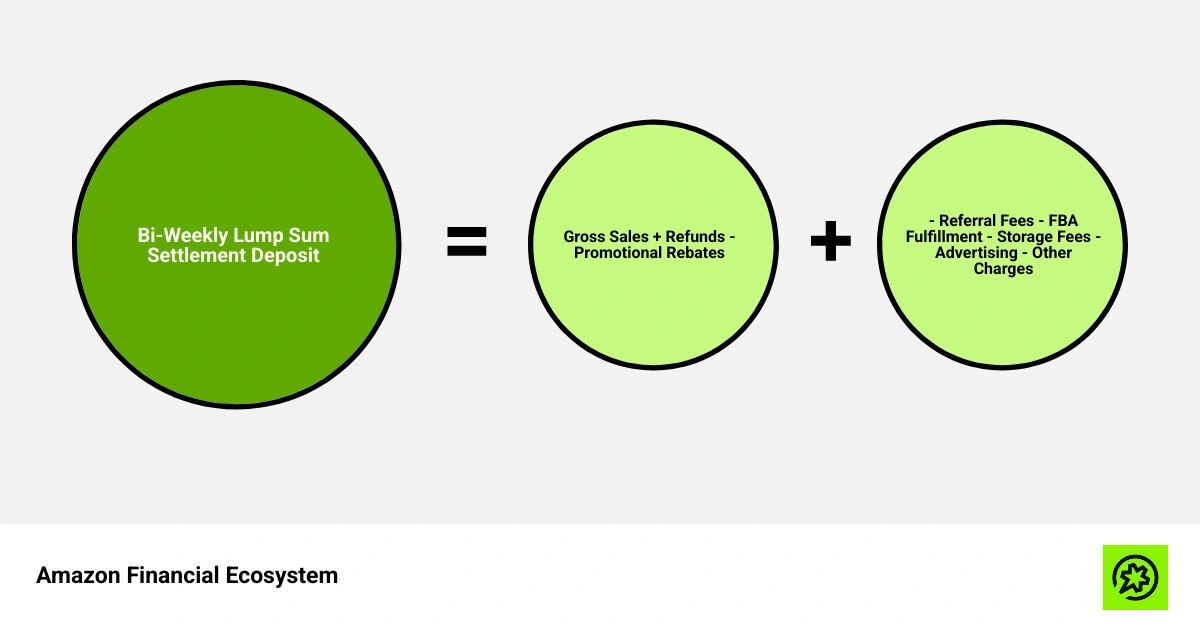
Amazon makes this harder than it sounds. The platform deposits a single lump sum into your bank account every two weeks. That number is not your revenue. It is what is left after Amazon has already taken out referral fees, fulfillment charges, storage costs, advertising spend, and refund adjustments. If you record that deposit as income, your books are wrong from the start.
For creative entrepreneurs who would rather be building their brand than staring at spreadsheets, this financial complexity is real and stressful. But ignoring it is far more costly than facing it.
This guide walks you through everything you need to manage your Amazon finances clearly and confidently.
Essential bookkeeping for amazon sellers terms
Why bookkeeping for amazon sellers works differently from traditional retail
If you ran a local boutique, your bookkeeping would be relatively straightforward. You sell a shirt, you collect the cash, and you pay your rent. Amazon is a different beast entirely. It acts as a sales channel, a warehouse, a shipping company, and a bank all at once. This multi-layered relationship creates several unique hurdles that standard bookkeeping for small business methods often miss.
One of the biggest headaches is the lump sum settlement. Every two weeks, Amazon sends a deposit to your bank. However, that single number represents thousands of individual transactions, including gross sales, shipping credits, gift wrap fees, and promotional rebates. On the flip side, it also hides deductions for referral fees, FBA fulfillment costs, and storage. If you simply record the bank deposit as revenue, you are understating your actual sales and completely missing your expense ratios. This makes it impossible to know your true gross margins.
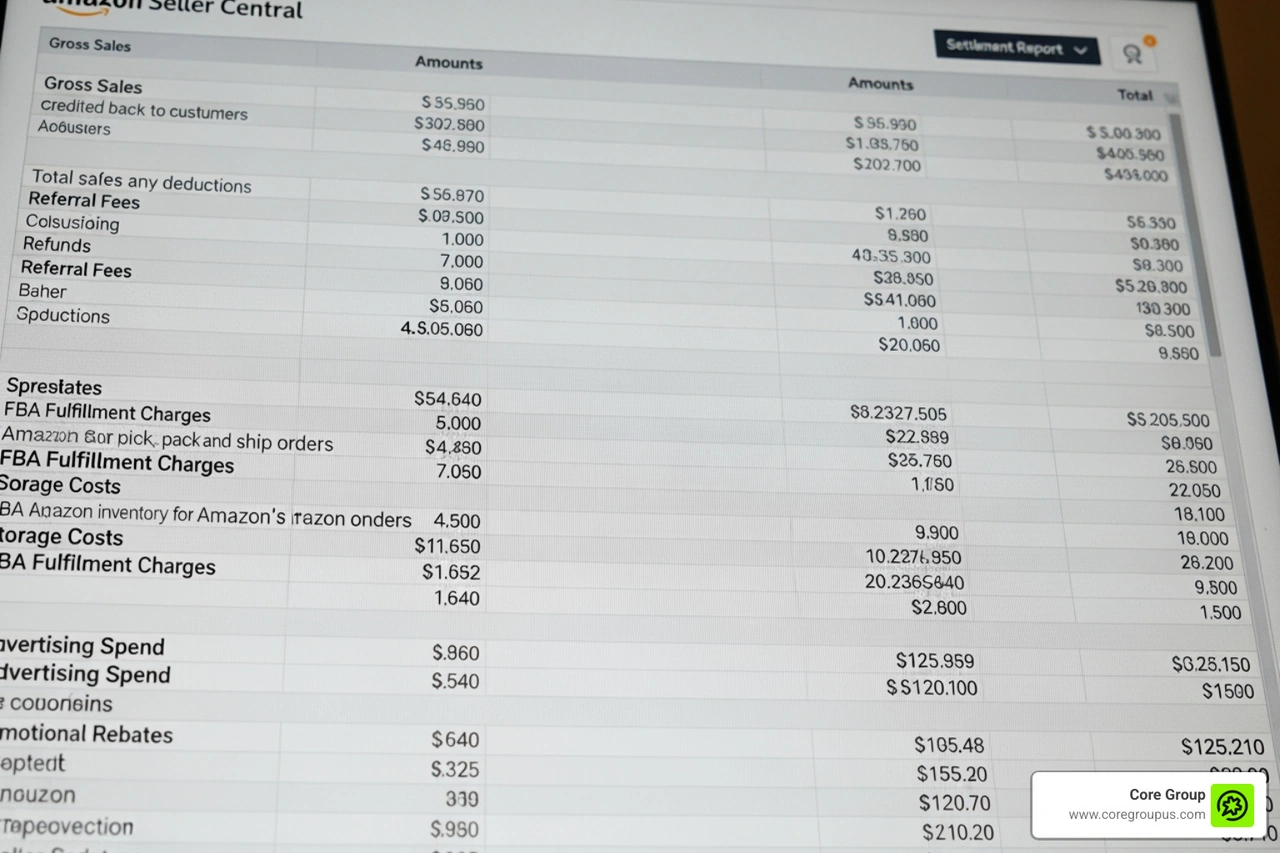
Then there is the timing issue. Amazon payout periods rarely align with the calendar month. A settlement might start on May 24 and end on June 6. To get an accurate picture of how your business performed in May, you have to split that settlement and assign the right portions to the right month. Without this, your monthly profit and loss statements will fluctuate wildly, making it look like you had a fantastic month followed by a disaster, even if your sales were steady.
We also have to deal with what some sellers call mystery math. This includes reconciling your books with the 1099-K form Amazon sends to the IRS. The 1099-K reports gross sales, which includes things like sales tax collected by Amazon and shipping credits that you never actually pocketed as profit. If your books do not show how you got from that high gross number to your actual net profit, you might trigger an audit. Plus, Amazon warehouses sometimes create ghost SKUs when inventory is misplaced or found, which can throw your inventory counts into a tailspin if you are not watching the reports closely.
Essential software and bookkeeping for amazon sellers
Because of the sheer volume of data, manual entry is the enemy of accuracy. If you try to type every Amazon transaction into a spreadsheet, you will eventually make a mistake. For most sellers, the goal is to move toward automation as quickly as possible. This is where virtual bookkeeping companies and specialized tools become lifesavers.
We recommend using a connector tool like A2X. This software acts as a bridge between Amazon Seller Central and your accounting platform. It fetches your settlement reports and automatically breaks them down into neat journal entries. Instead of one confusing bank deposit, you see your total sales, your total fees, and your total refunds neatly categorized.
For the core accounting software, QuickBooks Online and Xero are the industry standards. They integrate seamlessly with most ecommerce tools and provide the robust reporting you need to scale. Beyond the software, you should maintain a cloud storage system for your digital receipts and records. Even though the IRS accepts digital copies, you still need an organized place to keep them. Using data range summary reports from Seller Central is the best way to pull the high level numbers you need for monthly tracking, ensuring your ecommerce financial records are always up to date.
Tracking sales tax and international bookkeeping for amazon sellers
Sales tax used to be a nightmare for Amazon sellers, but things have changed thanks to marketplace facilitator rules. In most states, Amazon is now responsible for collecting and remitting sales tax on your behalf. However, this does not mean you can ignore it. You may still have a physical nexus in states where your inventory is stored in FBA warehouses. This often requires you to register for a permit and file zero dollar returns even if Amazon is doing the heavy lifting.
If you are selling internationally, the complexity doubles. You have to navigate VAT compliance in Europe or the UK and handle multi currency sales. When Amazon pays you in Euros but your bank account is in US Dollars, the exchange rate can eat into your profits if you are not tracking it. Proper business tax optimization for international sellers also involves accounting for customs duties and import taxes, which should be included in your product costs rather than just treated as a random expense.
Choosing the right accounting method and software
When you start your journey with bookkeeping for amazon sellers, you have to make a choice between two main accounting methods including cash and accrual.
| Feature | Cash Basis | Accrual Basis |
|---|---|---|
| Revenue Recognition | When cash hits your bank | When the sale is made (shipped) |
| Expense Recognition | When you pay the bill | When the expense is incurred |
| Best For | Very small hobby businesses | Scaling brands and inventory businesses |
| Accuracy | Can be misleading monthly | Provides true profitability insights |
| IRS Requirement | Allowed for most small businesses | Required if revenue exceeds $29M |
Cash basis is simpler because you only record money when it moves. But for an Amazon seller, it is dangerous. If you buy $20,000 worth of inventory in May but don't sell it until July, a cash basis report will show a massive loss in May and a huge, fake profit in July. Accrual accounting matches the cost of the product to the moment it is sold. This gives you a real time picture of your financial health and is what expert bookkeeping services use to help sellers make smart decisions.
Setting up a professional chart of accounts
Your chart of accounts is the foundation of your financial house. If it is messy, your reports will be useless. A standard bookkeeping services complete guide will tell you to keep things simple, but Amazon sellers need specific sub categories to see where their money is going.
Instead of one big expense account for Amazon Fees, you should break it down. You want to see referral fees, storage charges, and FBA fulfillment fees separately. Why? Because if your storage charges suddenly spike, you need to know so you can clear out old inventory. You should also have a dedicated section for advertising spend, separated from other marketing costs, so you can calculate your return on ad spend. Finally, don't forget to include a category for owner compensation. You are a business owner, not just a volunteer, and your pay should be tracked properly.
Managing complex fees and inventory costs
Inventory is usually your biggest asset and your biggest expense. Managing it correctly is the difference between a thriving brand and an expensive hobby. You have to track more than just the purchase price of your goods. You need to calculate landed costs, which include the price you paid the manufacturer, plus shipping, customs duties, inspection fees, and the cost of getting the goods to the FBA warehouse.
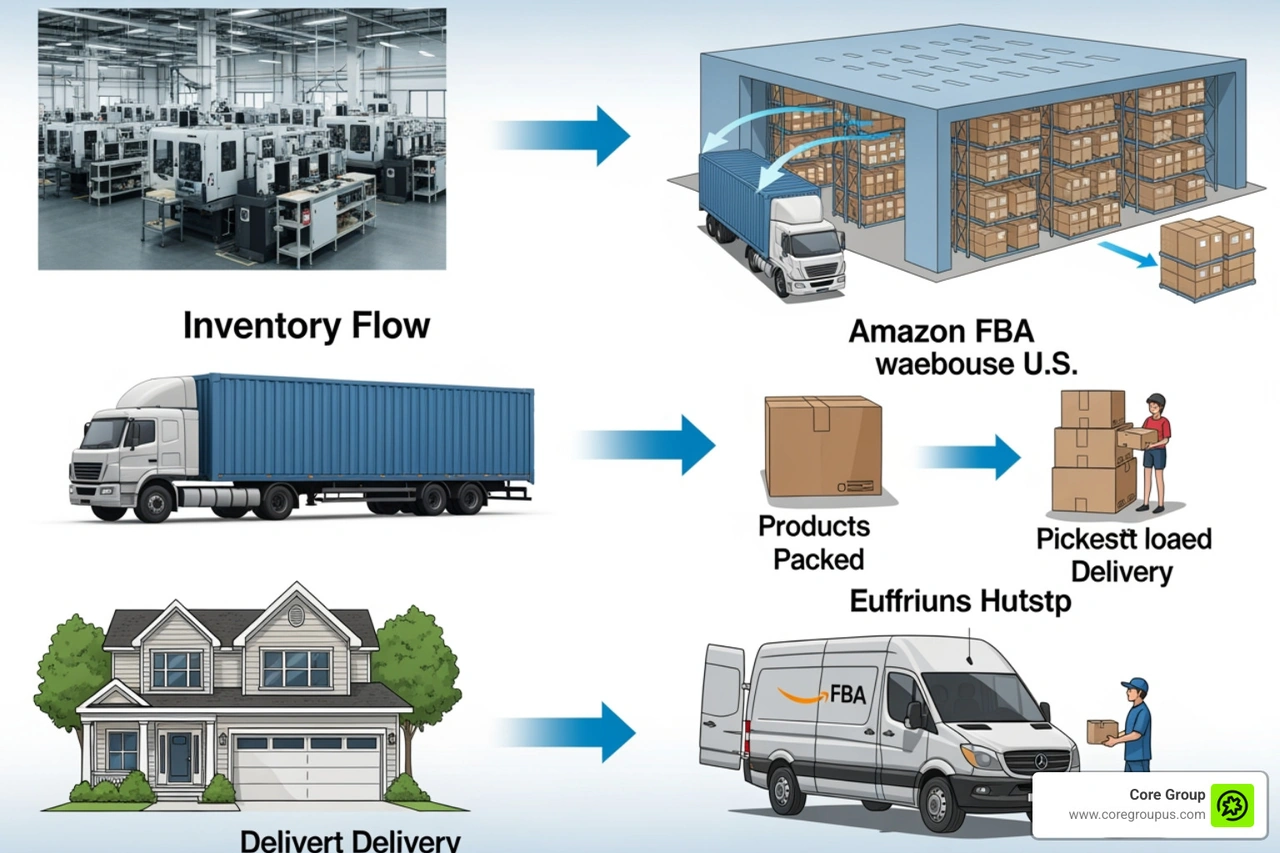
Most bookkeepers recommend the FIFO (First-In, First-Out) method for inventory valuation. This assumes the oldest stock is sold first, which usually matches how Amazon ships items. It is also vital to keep an eye on warehouse damage and lost goods. Amazon is supposed to reimburse you for these, but they don't always do it automatically. You need to reconcile your inventory adjustments reports and file reimbursement claims within the allowed windows to get your money back.
Calculating true product profitability
To know if a product is actually making money, you have to look beyond the surface. Many sellers focus on ACOS (Advertising Cost of Sale), but TACOS (Total Advertising Cost of Sale) is a much better metric. TACOS measures your ad spend against your total revenue, showing how your marketing is helping your organic growth.
If you are following a bookkeeping services texas guide or working with local experts, they will tell you that gross margins are king. You have to account for aged inventory surcharges, which can skyrocket if items sit in a warehouse for more than 180 days. You also need to factor in promotional rebates. If you run a big sale, Amazon still charges fees based on the original price in some cases, which can vanish your margins if you aren't careful.
A step by step monthly process for avoiding common mistakes
To keep your books from becoming a jungle, you need a routine. Here is a simple monthly process
- Download your settlement reports for the month.
- Use a tool like A2X to push those summaries into QuickBooks or Xero.
- Reconcile your bank deposits to ensure every penny from Amazon is accounted for.
- Record your Cost of Goods Sold based on the units actually shipped.
- Check your FBA inventory adjustments for any lost or damaged items that need a claim.
- Set aside 25% to 30% of your net profit for quarterly estimated taxes.
One of the most common mistakes we see is commingling funds. Never use your business account for personal groceries, and never use your personal card for business inventory. It makes a mess that is expensive to fix. Also, be careful about bad hires. Trying to save money by hiring a cheap, non-specialized bookkeeper can cost you thousands in missed deductions and errors. A bookkeeping services el paso guide might offer general advice, but Amazon sellers need someone who understands the platform's unique audit triggers.
What is the difference between bookkeeping and accounting
People often use these terms interchangeably, but they are different. Bookkeeping is the daily and monthly recording of data. It is the data entry, the receipt scanning, and the initial reconciliation. A bookkeeper frisco tx or anywhere else focuses on keeping the records clean and accurate.
Accounting is the next level. It involves taking those clean records and performing financial analysis and strategic planning. An accountant helps you with tax preparation, business structure, and long term scaling. Bookkeeping tells you where you are while accounting helps you decide where to go next. Both are essential for staying in compliance and growing your brand.
How do I handle Amazon reimbursements and reserves
Amazon often holds a portion of your funds in reserve to cover potential returns or chargebacks. This is called a carried forward balance. On your balance sheet, this should be recorded as an asset because it is money you have earned but haven't received yet.
For reimbursements, you need to be proactive. Use the inventory adjustments report to find units that were lost or damaged by Amazon. There is usually an 18 month window to file a claim for these. If you aren't checking this regularly, you are leaving free money on the table. Working with bookkeeping services dallas can help you set up a system to catch these adjustments every month.
Do I need a specialized ecommerce accountant
The short answer is yes. A general accountant might be great for a construction company or a doctor's office, but they often struggle with the complexity of Amazon's fee structures and platform integrations. A specialized ecommerce accountant understands things like single member llc taxes in the context of online sales and can provide proactive tax planning that saves you significant money as you scale. They know how to handle the data flow from Amazon, Shopify, and other channels to give you a consolidated view of your business.
Conclusion
Managing your Amazon business is a journey, and your finances are the map. Without accurate bookkeeping for amazon sellers, you are flying blind in a very competitive marketplace. By using the right software, choosing accrual accounting, and staying on top of your monthly reconciliations, you can turn those confusing settlement reports into clear insights for growth.
At Core Group, we specialize in helping creative entrepreneurs get their financial house in order. Our no-fluff, profit-first playbook is designed to give you peace of mind and save you time, so you can focus on what you do best which is building your brand. We are so confident in our ability to streamline your business that we even offer a MacBook Pro guarantee. Don't let your books become a jungle. Let us help you find the clear path to profitability.