The Ultimate Guide to Finding a Small Business Financial Advisor
Why Every Small Business Owner Needs a Financial Advisor
A small business financial advisor is a specialist who helps business owners build financial strategy, manage cash flow, and plan for long-term growth, including the eventual sale or transition of the business.
If you're looking for a quick answer, here is what you need to know.
- What they do - provide forward-looking financial strategy for your business and personal finances
- Who needs one - any business owner with complex finances, unpredictable cash flow, or growth goals
- When to hire one - ideally before a crisis, especially during growth phases or 3-5 years before a planned exit
- What it costs - typically $200-$400/hour, $2,000-$9,000/year on retainer, or 0.25-2% of assets under management
- Where to start - ask other business owners for referrals, verify credentials (CFP, CPA/PFS), and confirm fiduciary duty in writing
Running a creative business means your brain is pulled in a hundred directions at once. Client work, deadlines, team management, and the relentless pressure of making payroll. Finances? They slide to the bottom of the list.
But here's the thing. Most financial stress in small businesses isn't a revenue problem. It's a clarity problem.
According to research from the Exit Planning Institute, 76% of business owners report feeling profound regret just one year after selling their business. And between 70% and 80% of businesses put up for sale never actually sell.
The difference between owners who thrive and those who struggle often comes down to one thing, which is having the right financial guidance at the right time.
This guide walks you through everything you need to know to find, evaluate, and work with a small business financial advisor who actually fits your business.
Small business financial advisor vocabulary
What is a Small Business Financial Advisor
A small business financial advisor is a professional who focuses on the future of your wealth. They do not just look at what you spent last month. Instead, they look at where your business is going over the next three, five, or ten years.
By looking at your business through a strategic lens, these advisors help you make sense of your numbers. They work with you to design a clear path toward sustainable growth. When you partner with a specialized advisor, you gain access to comprehensive business financial planning services that connect your daily operations with your ultimate wealth goals.
How they differ from general financial advisors
A general financial advisor usually focuses on personal wealth management. They help individuals build retirement portfolios, buy homes, and save for college. While these are important goals, a generalist often lacks the tools to handle the complex realities of running a company.
A specialized advisor understands that a business owner has unique needs. Your personal wealth and your business assets are deeply intertwined. A specialized advisor can guide you through corporate structure decisions, business tax planning, and payroll systems. They know how to extract value from your company so that you are not business rich but cash poor.
The difference between advisors accountants and bookkeepers
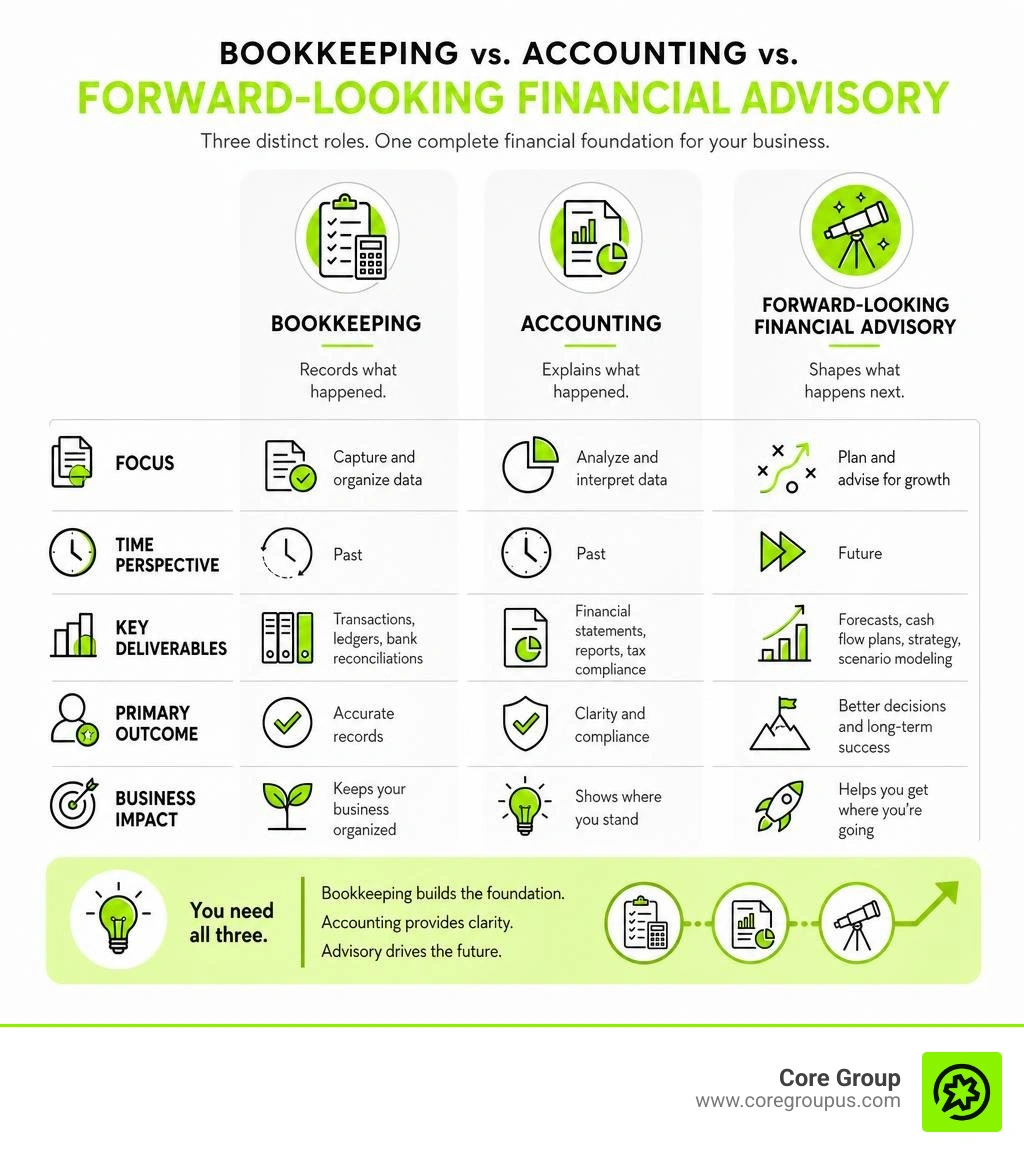
Many business owners confuse these three roles, which can lead to gaps in their financial teams.
Bookkeepers focus on daily transactions. They record expenses, manage payroll, and keep your files organized.
Accountants take that historical data and ensure you remain compliant with tax laws. They look backward to file accurate tax returns.
A financial advisor looks forward. They use the clean data provided by your bookkeeper and accountant to build a strategic roadmap.
| Feature | Bookkeeper | Accountant | Financial Advisor |
|---|---|---|---|
| Primary Focus | Recording daily transactions | Historical compliance and tax filing | Forward-looking strategy and growth |
| Data Used | Receipts and bank statements | Completed financial statements | Forecasts and market trends |
| Key Output | Clean ledgers and reconciled accounts | Tax returns and financial audits | Strategic plans and investment advice |
Key Services Provided by Specialized Advisors
Working with a specialized advisor gives you the clarity to run your business with confidence. They provide a suite of services designed to keep your business healthy and profitable.

A great advisor will evaluate your entire financial picture. They help you identify hidden profit leaks and implement strategies for business tax optimization to ensure you keep more of what you earn.
Cash flow management and budgeting
Cash flow is the lifeblood of any business, yet cash leaks can quietly drain your profits. An advisor helps you build a solid system for budgeting for entrepreneurs so you always know where your money is going.
They help you analyze your profit margins and set up cash flow forecasting tools. This prevents payroll panic and ensures you have the capital needed for seasonal slow periods or sudden growth opportunities.
Tax planning and optimization strategies
Tax compliance is only the baseline. To truly build wealth, you need proactive tax planning. An advisor works with you throughout the year to lower your overall tax liability.
They help you structure your business entity correctly and maximize your legal deductions. By learning about corporate tax planning and strategy, you can make smarter decisions about equipment purchases, hiring, and retirement contributions.
Risk mitigation and business continuity
What happens to your business if you get sick or injured? Research shows that one third of small business owners do not have a plan for unexpected disruptions.
An advisor helps you protect your hard work. They recommend appropriate liability protection and help you establish key person insurance to protect the business if a vital team member is lost. They also set up buy-sell agreements to ensure a smooth transition if a partner decides to exit or faces a life emergency. You can explore these protective measures further through business financial planning with a trusted advisor.
The Importance of Early Succession and Exit Planning
Many business owners think of exit planning as something to worry about decades from now. However, waiting too long to plan is a major mistake.

Starting your exit planning early can potentially double the value of your business in a three to five year window. It allows you to clean up your financial records, build a strong management team, and make the business highly attractive to potential buyers.
Why you need a small business financial advisor for exit planning
Selling a business is incredibly complex. A Certified Exit Planning Advisor can guide you through the process of determining an accurate business valuation and building a transition timeline.
They help you structure the sale to minimize taxes and protect your wealth. If you are ready to prepare your business for a future transition, you can consult with Core Group for transition planning to start building your roadmap today.
Overcoming the emotional and financial shifts of selling
The emotional side of selling a business is often harder than the financial side. A massive 76% of business owners experience profound regret within a year of exiting their company.
An advisor helps you prepare for this shift. They work with you to define your personal goals for life after the business. They design wealth preservation strategies and legacy plans so that your hard-earned money continues to support your family for generations.
How to Choose the Right Partner for Your Business
Choosing an advisor is one of the most important decisions you will make for your business. You need a partner who understands your industry and communicates in plain English.
Essential credentials to look for in a small business financial advisor
You should always verify an advisor's credentials before hiring them. Look for professionals who hold respected designations.
- Certified Financial Planner - This designation ensures the advisor has met rigorous education and experience standards in comprehensive financial planning.
- Personal Financial Specialist - This is a credential for CPAs who specialize in helping small business owners manage their personal and business wealth.
- Chartered Financial Consultant - This indicates advanced training in financial planning and niche business needs.
Make sure your advisor acts as a fiduciary 100% of the time, which means they are legally required to put your best interests first.
Questions to ask during your search
When interviewing prospective advisors, ask specific questions to understand how they work.
- Are you a registered fiduciary, and can you provide that commitment in writing?
- How do you charge for your services, and do you receive commissions for recommending specific products?
- What experience do you have working with creative entrepreneurs or service-based businesses?
- How often will we meet to review my business and personal goals?
Free and Low Cost Resources for Small Businesses
If you are not yet ready to hire a private advisor, there are excellent free and low-cost resources available to help you build your financial foundation.
Through state-level programs, you can access professional guidance without a massive price tag. For example, you can access California Small Business Support Centers for local advising and funding assistance.
Small Business Development Centers and SCORE
The Small Business Administration partners with local organizations to provide free mentoring and training. You can connect with the Alabama Small Business Development Center Network or find a local SCORE chapter in your area to get matched with an experienced business mentor. These mentors can help you with basic budgeting, business planning, and loan applications.
Frequently Asked Questions about Small Business Financial Advisors
When is the best time to hire a financial advisor for my business
The best time to hire an advisor is before you face a financial crisis. You should consider hiring a partner when your business experiences rapid growth, when your cash flow becomes unpredictable, or when you are three to five years away from a planned exit.
How much do small business financial advisors typically charge
Advisors use several different fee models. Some charge hourly rates between $200 and $400. Others charge flat monthly retainer fees ranging from $2,000 to $9,000 per year, or they charge a percentage of assets under management, typically between 0.25% and 2%.
Can an advisor help with both personal and business finances
Yes. In fact, the best advisors specialize in bridging the gap between your personal and business finances. They help you balance business reinvestment with personal retirement planning, estate planning, and family protection.
Conclusion
At Core Group, we understand that creative entrepreneurs want to spend their time creating, not drowning in spreadsheets. We offer financial management, bookkeeping, and tax services specifically tailored for creative business owners.
Our unique profit-first playbook guarantees peace of mind and saves you valuable time. We back our services with our signature MacBook Pro guarantee, which ensures you get the modern, high-touch support you deserve.
Are you ready to take control of your financial future? You can get started with professional tax planning today and build a business that fully supports your life.