Stop Writing Checks and Start Using Small Business Direct Deposit
Why Small Business Direct Deposit Is Worth Making the Switch
Small business direct deposit is the fastest, most reliable way to pay your team, and over 93% of employees already receive their wages this way.
If you're weighing whether to switch from paper checks, here is what you need to know right now.
- What it is, which is an electronic transfer of funds from your business bank account directly into your employee's bank account, processed through the ACH (Automated Clearing House) network
- How fast it is, with funds typically arriving within 1-3 business days, and same-day options available through many providers
- What it costs, as many payroll software providers include direct deposit at no extra charge, though banks may charge small setup or transaction fees
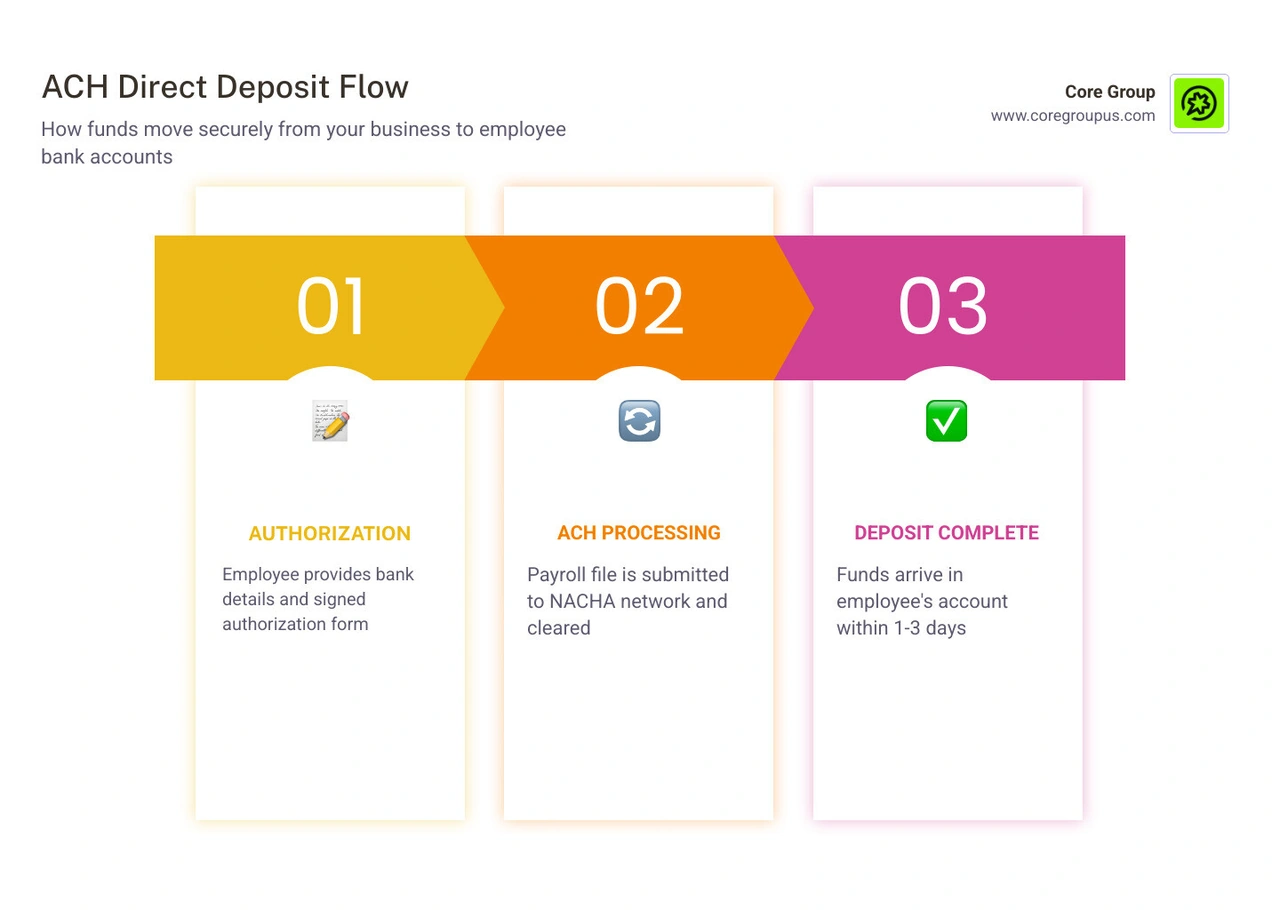
- What you need, including your employee's bank name, account number, routing number, and a signed authorization form
- Who it works for, which includes businesses of any size, paying both employees and independent contractors
Still writing checks every payday? You're spending more time, more money, and taking on more risk than you need to.
Paper checks get lost. They get delayed. They require a trip to the bank. And every check you print creates a paper trail that could end up in the wrong hands.
Direct deposit eliminates all of that. It's simpler, safer, and, for most small businesses, cheaper than you'd expect.
For creative entrepreneurs juggling client work, projects, and finances all at once, removing the friction from payday is a small change that makes a big difference.
This guide walks you through everything, including how direct deposit works, how to set it up, what it costs, and how to pick the right provider for your business.
Small business direct deposit guides
Understanding Small Business Direct Deposit and How It Works
To understand how electronic payments benefit your business, it helps to understand what actually happens behind the scenes when you click send. Direct deposit is simply an electronic funds transfer that moves money from your business checking account directly into an employee bank account. This transaction travels through a highly regulated nationwide network.
The backbone of this entire system is the Automated Clearing House network, commonly known as the ACH network. This secure financial network in the United States handles billions of transactions every single year, including tax refunds, utility bill payments, and payroll. The network is overseen by NACHA, the organization that establishes the rules and guidelines for all ACH transactions.
When you run payroll, your payroll provider or bank packages your payroll data into a specific format called a NACHA file. This file contains all the routing numbers, bank account numbers, and payment amounts. This file is sent to your business bank, which acts as the entry point to the ACH network. The ACH network then batches these transactions and routes them to the respective banks of your employees, where the funds are credited directly to their accounts.
By utilizing this electronic system, you avoid the manual steps of writing, signing, and distributing physical checks. It is a highly efficient way to manage your cash flow because you know exactly when the funds will leave your account. For business owners seeking scalable administration, implementing these electronic systems is a key step in modernizing operations. You can learn more about finding the right setup in our guide to Sme Payroll Solutions.
The Benefits of Electronic Payments Over Paper Checks
Many small business owners stick with paper checks because they are familiar. However, when you look at the actual costs and security risks, paper checks quickly lose their appeal. Let us look at how the two payment methods stack up against each other.
| Feature | Paper Checks | Direct Deposit |
|---|---|---|
| Processing Time | High manual effort | Automated and fast |
| Delivery Speed | Dependent on mail or hand delivery | Funds available on payday morning |
| Security Risk | High risk of loss, theft, or fraud | Extremely secure bank-to-bank transfer |
| Cost | High cost of check stock, ink, and labor | Low cost, often free with payroll software |
| Environmental Impact | High paper waste | Fully paperless and eco-friendly |
| Employee Convenience | Requires a trip to the bank or ATM | Automatic deposit with online access |
The financial benefits of switching to electronic payments are substantial. When you calculate the cost of check stock, envelopes, postage, printer ink, and the valuable time spent signing and distributing checks, paper checks become incredibly expensive. Many business owners save hundreds of dollars every year simply by eliminating paper check supplies.
Beyond the direct costs, direct deposit significantly improves employee satisfaction and financial wellness. Your team members no longer have to spend their lunch breaks driving to a bank branch or waiting in line to deposit a check. The money is simply there for them on payday morning, even if they are on vacation, out sick, or working remotely.
From a cash flow management perspective, electronic payments offer unmatched predictability. With paper checks, you never know exactly when an employee will decide to cash their check. A check might sit in a drawer for weeks, making your bank balance look larger than it actually is. With electronic transfers, the funds leave your account on a predictable schedule, which makes bookkeeping and budgeting much easier. For a deeper look at managing these processes, check out our Payroll Services Small Business Guide.
How to Set Up Direct Deposit for Your Team Step by Step

First, you need to choose a reliable direct deposit provider. This is typically done through a modern payroll platform, though some businesses choose to work directly with their business bank. Working with a dedicated payroll provider is generally much easier because they handle all the tax calculations and filing automatically.
Once you have your provider, you will need to link your business bank account. The provider will typically run a quick verification process, which may involve making small micro-deposits into your account to ensure the connection is secure. After your bank account is verified, you are ready to start onboarding your team. If you are just starting out with your very first worker, you can read our guide on Small Business Payroll One Employee to make sure you have all your bases covered.
Gathering Employee Information for Small Business Direct Deposit
To send money electronically, you must gather accurate banking details from each team member. You cannot rely on verbal information, as a single typed digit error can cause a transaction to fail or go to the wrong account.
You should provide each employee with a formal authorization form. This form gives you legal permission to deposit funds into their account and, in rare cases of error, reverse an incorrect transaction. You can use standard templates or refer to official state forms like the phrst direct deposit authorization form as an example of what information to collect.
For every employee, you will need to collect the following details.
- The employee's full name as it appears on their bank account
- The name of their financial institution
- The bank routing number, which is a nine-digit code identifying the bank
- The employee's bank account number
- The account type, whether it is a checking or savings account
It is highly recommended to ask for a voided check or an official bank direct deposit letter along with the authorization form. This allows you to verify the routing and account numbers before entering them into your payroll system.
Syncing Your Payroll Schedule and Processing Payments
After entering your employees' information, you need to align your payment schedule with your provider's processing times. Electronic payments do not happen instantly; they require a certain amount of lead time.
Most payroll providers operate on a two-day or four-day processing window. This means you must submit your payroll data a few days before the actual payday. For example, if your payday is Friday and you have a two-day processing lead time, you must submit your final payroll details by Wednesday morning.
During this lead time, your payroll provider generates the necessary files, initiates the debit from your business bank account, and schedules the deposits to arrive in your employees' accounts by early Friday morning. Keeping a strict payroll calendar ensures that your team is always paid on time and that you maintain a healthy relationship with your workforce.
Choosing the Right Payroll Provider for Your Business

When evaluating your options, you should look for a platform that integrates seamlessly with your existing bookkeeping software. When your payroll and bookkeeping systems talk to each other, you eliminate the need to manually enter payroll transactions into your ledger. This reduces errors and keeps your financial records up to date.
You also want to make sure your provider handles tax compliance. Payroll taxes can be incredibly complex, and mistakes can lead to costly penalties. A great provider will automatically calculate, withhold, and pay your local, state, and federal payroll taxes. For businesses operating in specific regions, you might want to look into regional guides like our Payroll Services California Guide or explore specialized requirements in our resource on Certified Payroll Services California.
Selecting the Best Small Business Direct Deposit Provider
As you shop around for a provider, look closely at the specific features they offer. You want a platform that makes life easier for both you and your team.
Key features to look for include the following.
- Employee self-service portals where your team can log in, view their pay stubs, download their tax forms, and update their own banking information
- Flexible payment speeds, including next-day or same-day processing options for times when you need extra flexibility
- Automated tax filing that handles all quarterly and annual payroll tax forms on your behalf
- Clear pricing structures with no hidden fees or surprise charges at the end of the month
- User permission controls so you can decide who has access to sensitive payroll data within your company
If you run a unique type of organization, such as a non-profit, you will want to ensure the platform can handle your specific tax-exempt status. You can learn more about these nuances in our guide on Payroll For Small Nonprofit.
Evaluating Security and Fraud Protection Measures
Handling your team's banking information requires a high level of responsibility. You must ensure that any provider you choose employs top-tier security standards to protect this sensitive data.
Look for providers that use bank-level data encryption to secure information both in transit and at rest. They should have robust fraud prevention measures in place, such as multi-factor authentication for administrative users.
Using a secure third-party payroll provider actually increases your overall business security. Instead of storing employee routing and account numbers on paper forms in a filing cabinet, all sensitive data is encrypted and stored securely in the cloud. This significantly reduces the risk of identity theft and internal fraud. To make sure you are fully protected on all fronts, you can read more about Payroll Tax Compliance.
Frequently Asked Questions About Payroll Processing
We know that making the switch to electronic payments can bring up a lot of questions. Here are the answers to some of the most common questions small business owners ask.
How long does it take for employees to receive their pay
The standard turnaround time for electronic payments is two to three business days. However, many modern payroll providers now offer next-day or even same-day processing options for qualifying businesses. With same-day processing, if you submit your payroll by a certain morning deadline, the funds will arrive in your employees' accounts by the afternoon.
Can you use direct deposit to pay independent contractors
Yes, you can absolutely use electronic payments to pay your independent contractors and freelancers. In fact, doing so is highly recommended. It allows you to keep all of your business payments in one central place, simplifies your year-end tax reporting, and keeps your contractors happy by getting them paid faster.
What are the typical costs of setting up electronic payments
The cost of electronic payments depends on the route you choose. If you go directly through your business bank, they may charge a setup fee of a few hundred dollars plus monthly maintenance fees and per-transaction charges. However, if you use a modern online payroll service, electronic payments are typically included for free as part of your flat monthly software subscription.
Conclusion
Switching to small business direct deposit is one of the easiest ways to save time, reduce administrative headaches, and protect your business from fraud. It is a win-win for everyone involved. Your team gets paid reliably and securely, and you get to stop spending your valuable time writing, signing, and tracking paper checks.
As a creative entrepreneur, your time is your most valuable asset. Every hour you spend dealing with manual payroll administrative tasks is an hour you could have spent growing your business, serving your clients, or focusing on your craft.
At Core Group, we help creative business owners take control of their finances with our no-fluff, profit-first playbook. We offer comprehensive financial management, bookkeeping, and payroll services designed to give you complete peace of mind. Backed by our famous MacBook Pro guarantee, we handle the numbers so you can focus on what you do best.
Ready to make paper checks a thing of the past? Get started with professional payroll services today and let us help you simplify your business finances.