The Creator's Guide to Finding a Tax Pro Who Gets It
When Your Finances Are as Complex as Your Content
Finding the right accountant for YouTubers can be the difference between keeping more of what you earn and losing sleep over a tax bill you didn't see coming.
Here's a quick answer to what you're looking for:
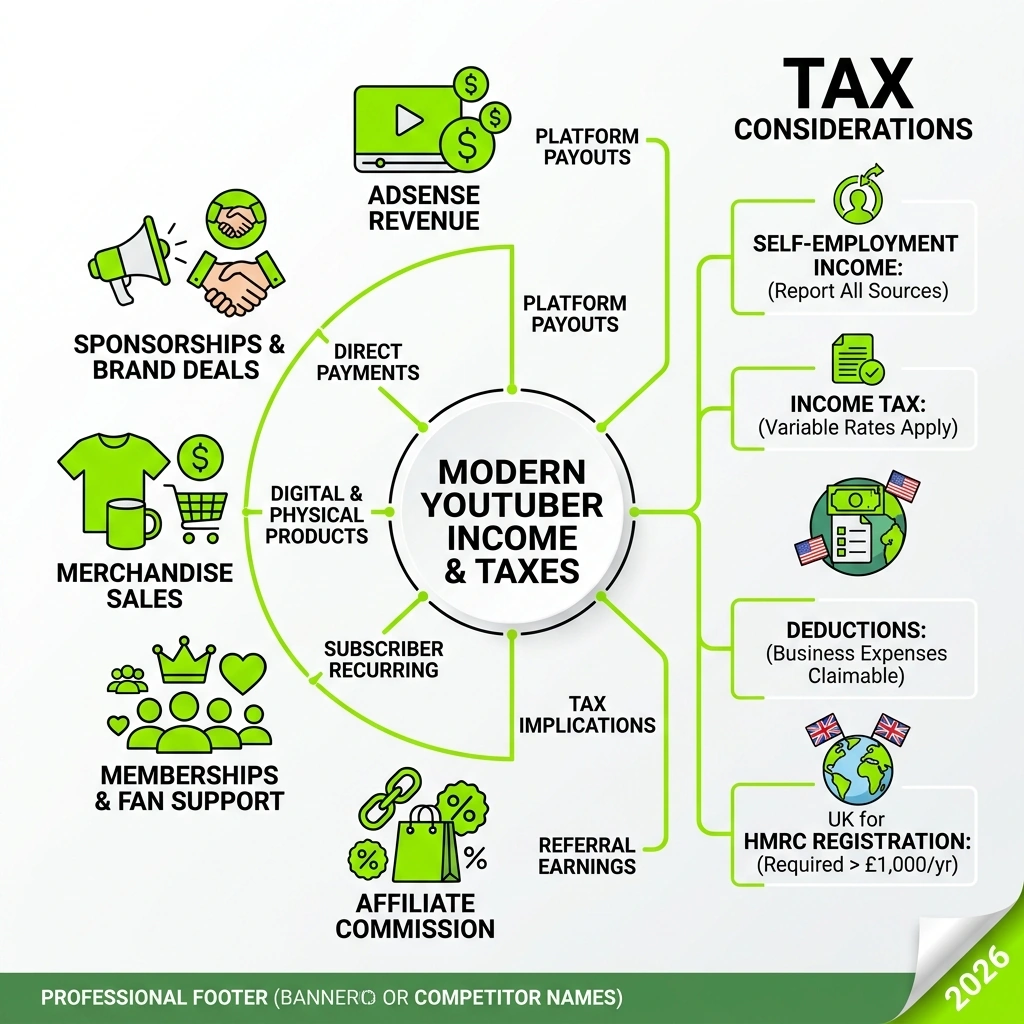
- YouTubers need a specialist accountant who understands income from AdSense, sponsorships, merch, memberships, and affiliate deals
- In the UK, you must register with HMRC if you earn over £1,000 per year from your channel
- In the US, YouTube income is self-employment income, subject to both income tax and self-employment tax
- A good YouTuber accountant helps you claim deductions, stay compliant, and structure your business to pay less tax legally
- Specialist firms exist for both UK creators (HMRC, VAT, self-assessment) and US creators (IRS, LLC, S-Corp)
YouTube has grown into a serious business platform, with over 2 billion monthly active users and more than 500 hours of video uploaded every single minute. For many creators, what started as a hobby has quietly become a multi-stream income business.
But here's the problem: most accountants have no idea how any of that works.
The Wall Street Journal once described tax season for influencers as the "Wild West" — and that description still holds. Brand deals, platform payouts, gifted products, affiliate commissions, digital product sales — each one has its own tax treatment, and getting it wrong can mean penalties, missed deductions, or worse.
That's exactly why finding a specialist matters.
Why you need a specialized accountant for YouTubers
When we talk to creators, the most common frustration we hear is that their previous accountant treated them like a traditional brick-and-mortar shop. But your "shop" is a digital ecosystem. A generalist might understand how to balance a checkbook, but do they understand the difference between a sponsorship payment and a royalty? Do they know how to handle a 1099-K from a payment processor versus a 1099-NEC from a brand?
As the industry has grown into a multi-billion-pound sector, the financial stakes have risen. If you are a social media influencer or YouTuber, selecting the right accounting firm is one of the most important decisions you can make for your long-term career. A specialist acts as a partner who understands the "weird and wonderful" world of the creator economy.
In the article For Influencers, Tax Season Is the Wild West, it's noted that the speed of the industry often outpaces traditional tax guidance. We see this every day. You might go viral overnight, and suddenly your hobby is a high-revenue business. Without a proactive strategy for Taxes for Influencers, you could end up handing over a massive chunk of your hard-earned revenue to the government simply because you didn't have the right structure in place.

Unique tax challenges for digital creators
The primary challenge for YouTubers is the sheer variety of income streams. You aren't just getting one paycheck; you're likely managing:
- AdSense: Direct payments from the platform.
- Sponsorships: Direct brand deals that often involve "gifted" items (which are usually taxable income!).
- Affiliate Marketing: Commissions from links in your description.
- Merchandise: Physical or digital product sales.
- Fan Funding: Platforms like Patreon, Buy Me a Coffee, or YouTube Memberships.
Each of these has different rules. For example, if you're also active on other platforms, you might be dealing with Clearing Up Confusion on the TikTok Creator Fund Tax. These funds are often treated differently than standard business income depending on how the platform classifies the payment. A specialized accountant for YouTubers will help you categorize these correctly so you aren't paying more tax than necessary.
Professional tax filing and compliance for an accountant for YouTubers
Compliance is the "boring" part of being a creator, but it's the part that keeps you out of legal trouble. In the UK, YouTubers can earn £1,000 per tax year tax-free as a "trading allowance." However, once you pass that £1,000 mark, you must register for Self Assessment. If your income exceeds £12,570, you'll start paying income tax.
In the US, the rules are similarly strict. The IRS views you as a small business owner. This means you are responsible for:
- Self-Employment Tax: Covering Social Security and Medicare.
- Income Tax: Based on your total earnings.
- Quarterly Estimated Taxes: The IRS doesn't want to wait until April to get their money. If you expect to owe more than $1,000, you generally need to make payments every three months.
Failing to stay on top of these can lead to hefty penalties and interest. A professional accountant ensures you're meeting these deadlines and filing the correct forms (like the 1040 Schedule C) accurately. We believe that professional tax help should more than pay for itself by avoiding these costly mistakes.
Maximizing your tax deductions and business write offs
One of the biggest perks of being a YouTuber is the ability to write off business expenses. However, this is also where many creators get into trouble by trying to deduct things that don't qualify. The IRS and HMRC look for expenses that are "ordinary and necessary" for your business.
When you work with a specialist, we help you identify every legal deduction possible. This isn't about "gaming the system"; it's about making sure you aren't overpaying. You can find a deeper dive into this in our guide on Bookkeeping for YouTubers.
Common deductible expenses for video production
What can you actually deduct? It's often more than you think. Common write-offs for creators include:
- Equipment: Cameras, lenses, microphones, lighting, and tripods.
- Software: Editing suites (Adobe Premiere, Final Cut), thumbnail design tools (Canva), and subscription services.
- Home Office: A portion of your rent or mortgage, utilities, and internet if you have a dedicated space for filming or editing.
- Travel: If you're a travel vlogger or traveling to a conference like VidCon, your flights, hotels, and a portion of your meals are deductible.
- Props and Sets: Items purchased specifically for a video (like a product for a review or background decor).
- Marketing: Ads to promote your channel or website.
- Professional Services: Fees paid to editors, managers, agents, and yes—your accountant.
For a comprehensive list of how to manage these, check out our Bookkeeping for Creatives Complete Guide.
What to look for in an accountant for YouTubers
Not all accountants are created equal. When you're interviewing a potential accountant for YouTubers, look for these three things:
- Industry Experience: Have they worked with creators before? Do they understand how platform-specific payouts work?
- Cloud-First Approach: You live your life online; your accountant should too. Look for someone who uses tools like Xero, QuickBooks Online, or specialized creator dashboards. This allows for real-time tracking rather than waiting for a shoebox of receipts at the end of the year.
- Proactive Communication: You don't want an accountant you only hear from in April. You need someone who will tell you during the year if you need to adjust your spending or set aside more for taxes.
Choosing the right business structure for your channel
As your channel grows, the way you "exist" in the eyes of the law needs to change. Most creators start as sole proprietors (or sole traders in the UK), which is the simplest form. But eventually, you'll reach a point where that's no longer the most tax-efficient or safest option.
Our guide on Bookkeeping for Solopreneurs explains that the right structure depends on your income level and your long-term goals.
| Feature | Sole Proprietor / Sole Trader | LLC (with S-Corp Election) / Limited Co |
|---|---|---|
| Setup Cost | Low to zero | Moderate |
| Complexity | Simple | High (requires separate tax returns) |
| Liability | Personal assets at risk | Personal assets generally protected |
| Tax Savings | None (pay tax on all profit) | Potential for significant savings on self-employment tax |
| Best For | Beginners / Side hustlers | Full-time creators earning $60k+ / £50k+ |
When to transition from hobbyist to business entity
A common question we get is, "When should I form an LLC or a Limited Company?"
In the US, many experts suggest considering an S-Corp election once your profit exceeds $60,000 to $100,000 annually. This structure allows you to pay yourself a "reasonable salary" and take the rest of the profit as a distribution, which isn't subject to self-employment tax. This can save you thousands of dollars every year.
Beyond tax savings, forming a legal entity provides liability protection. If your channel is sued (for copyright or defamation, for example), having an LLC helps protect your personal assets like your home and car. This is a crucial step for Influencers who are scaling their brand.
Benefits of professional bookkeeping and cloud software
You didn't start a YouTube channel to become a data entry clerk. However, keeping your books up to date is the only way to know if you're actually making money. Professional bookkeeping provides:
- Real-Time Tracking: Know your profit margins on every video.
- Financial Dashboards: See your income and expenses at a glance.
- Audit Protection: If the IRS or HMRC ever comes knocking, having clean, professional records is your best defense.
For those in the visual arts, our specialized services for Videographers highlight how automated bank feeds can save hours of manual work every month, allowing you to stay behind the lens rather than behind a spreadsheet.
Frequently Asked Questions about creator taxes
Navigating the financial side of the creator economy can feel like a maze. Here are the most common questions we hear from the community.
How much do accounting services for creators cost?
Pricing varies wildly depending on the level of service you need.
- Basic Tax Filing: Some firms offer one-off tax return filings starting around £400 or $500.
- Monthly Subscriptions: For ongoing bookkeeping, tax planning, and payroll, packages often range from $300 to $2,000 per month.
- Value-Based Pricing: The best firms charge based on the value they provide. If an accountant saves you $10,000 in taxes and 40 hours of work, a $5,000 annual fee is a massive win for your business.
We recommend looking for fixed-fee packages so you never have to worry about "the clock running" every time you ask a question.
How should YouTubers track their income to stay compliant?
The #1 piece of advice we give every creator: Separate your bank accounts.
Do not buy groceries with the same account that receives your AdSense payments. Having a dedicated business bank account makes bookkeeping significantly easier. We also recommend:
- Receipt Scanning: Use an app to snap photos of receipts immediately.
- Income Categorization: Label your income by source (Sponsorship, Ads, Merch) so you can see which part of your business is most profitable.
- Monthly Reviews: Spend 15 minutes a month looking over your numbers.
What are the benefits of VAT and payroll services?
If you're in the UK and your turnover exceeds £90,000, you must register for VAT. This adds a layer of complexity to your invoicing but also allows you to reclaim VAT on the equipment you buy.
In the US, if you've moved to an S-Corp structure, you are required to run payroll for yourself. This involves withholding taxes and filing quarterly payroll reports. While it sounds complicated, a specialized accountant for YouTubers will handle all of this for you, ensuring you remain compliant while maximizing your tax efficiency.
Conclusion
The creator economy is no longer just a trend; it's a legitimate, complex industry that requires professional financial management. Trying to navigate the "Wild West" of influencer taxes on your own is a recipe for burnout and expensive mistakes.
At Core Group, we offer a "no-fluff, profit-first playbook" designed specifically for creative entrepreneurs. We understand that your time is best spent creating content, not wrestling with spreadsheets. Our services provide the peace of mind you need to scale your channel, backed by our unique MacBook Pro guarantee.
Whether you're just starting to see your first AdSense checks or you're managing a massive multi-platform brand, we're here to help you turn your creative passion into a sustainable, profitable business. Ready to get your finances in order? Explore how we support Content Creators and let's get to work on your profit-first strategy.