The Art of the Ledger: Why Creative Businesses Need Smart Bookkeeping
Why Bookkeeping Can Make or Break a Creative Business
Creative entrepreneur bookkeeping is the process of recording, organizing, and tracking all the money flowing in and out of your creative business so you always know where you stand financially.
Here is a quick breakdown of what it covers and why it matters.
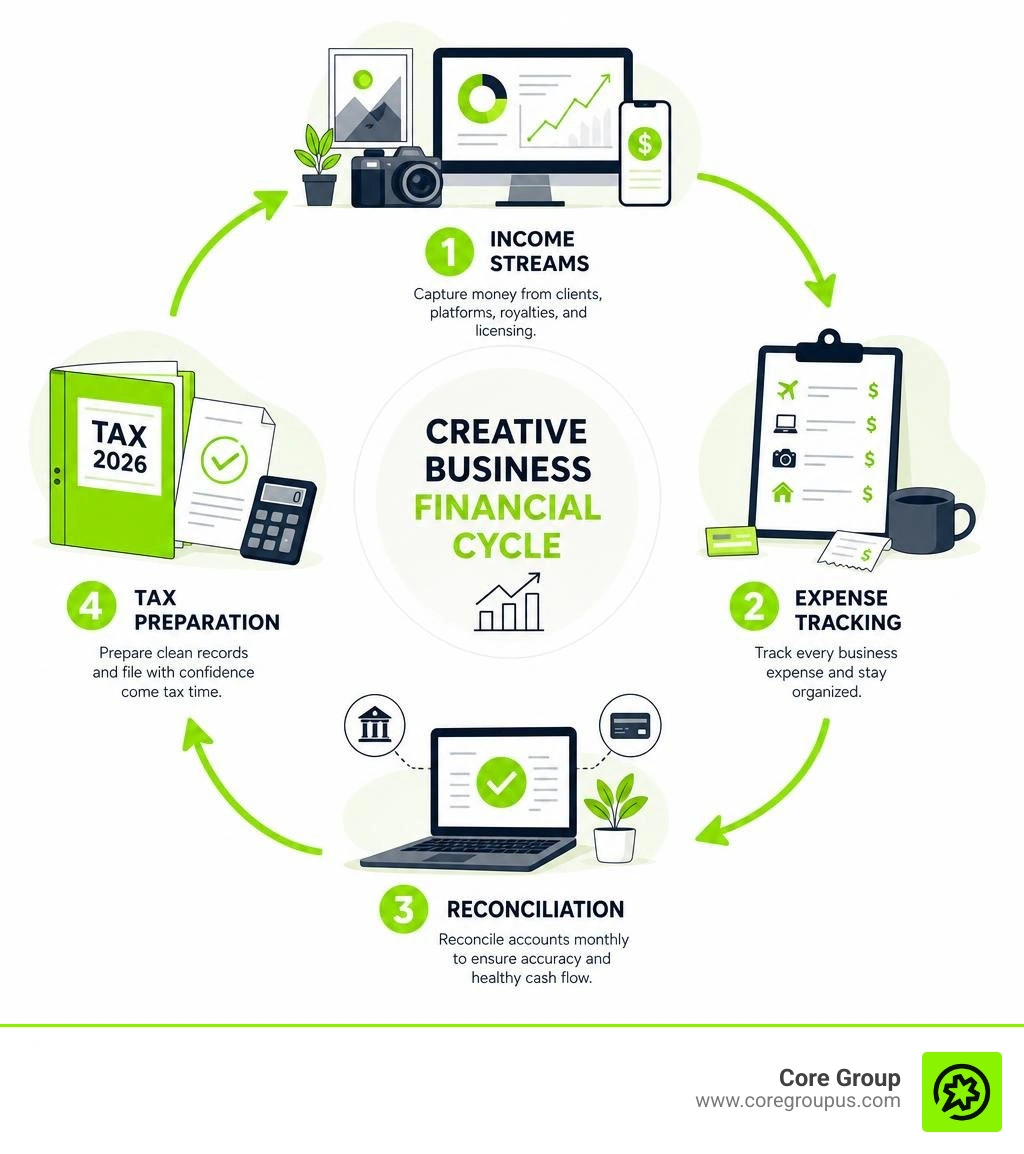
- Record income from every source, clients, platforms like Etsy, royalties, and licensing fees
- Track expenses including equipment, software, travel, and home office costs
- Separate personal and business finances to protect yourself and maximize deductions
- Reconcile accounts monthly to catch errors and cash flow problems early
- Prepare clean records so tax season does not become a crisis
Running a creative business is exciting. Whether you are a filmmaker, designer, photographer, or writer, you built something real around your talent.
But here is the uncomfortable truth. Most creative entrepreneurs are great at their craft and genuinely stressed about their finances. Only 29% of small business owners feel confident managing their own books. For creatives juggling multiple clients, platforms, and income streams, that number likely skews even lower.
It is not a character flaw. It is a skills gap, and it is fixable.
The good news is that you do not need to become an accountant. You just need a clear system that keeps your numbers honest, your taxes predictable, and your decisions grounded in real data rather than gut instinct.
This guide covers everything you need to know to get there.
Learn more about Creative entrepreneur bookkeeping through these resources.
The Essential Guide to Creative Entrepreneur Bookkeeping
When we talk about financial clarity, we are talking about the difference between running a sustainable business and managing an expensive hobby. Many designers, writers, and artists avoid looking at their numbers because spreadsheets make them flinch. However, ignoring the financial side of your business is like driving with your eyes closed. You might stay on the road for a little while, but eventually, you will hit a financial pothole.
Maintaining organized books gives you a clear picture of your business performance. It allows you to see which projects generate the most profit, where your cash is going, and when you can safely pay yourself. Without this foundation, you are left guessing about your rates, your taxes, and your business growth.
Developing a healthy relationship with your numbers is the first step toward true creative freedom. If you want to dive deeper into the fundamentals of managing your business finances, you can read our guide on Bookkeeping for Small Business.
Why Creative Entrepreneur Bookkeeping is Different
Creative businesses operate differently than traditional retail storefronts or consulting firms. Instead of receiving a single, steady paycheck or selling one type of physical inventory, a creative founder often manages a complex web of revenue streams.
You might receive project fees from clients, recurring monthly payments from retainer contracts, royalties from licensed artwork, and digital product sales from platforms like Etsy or Shopify. Each of these income sources has its own set of rules, processing fees, and payout schedules. For instance, Etsy sellers pay a minimum nine point five percent fee on every sale, which directly impacts your true profit margins. If you only track the final payouts deposited into your bank account, you are missing critical expense data that lowers your tax liability.
Additionally, creative service providers often hire independent contractors, such as virtual assistants, second shooters, or copy editors. Tracking these payments and issuing the correct tax forms requires structured recordkeeping.
Best Practices for Creative Entrepreneur Bookkeeping
To keep your business running smoothly, we recommend establishing a consistent rhythm. The most successful creative businesses are those that reconcile their accounts monthly. In fact, small creative businesses that perform monthly reconciliations are sixty percent more likely to identify cash flow issues before they become critical.
Start by creating a customized chart of accounts. This is simply a list of categories that make sense for your specific creative industry. Instead of using a giant catch-all category for office expenses, break your spending down into clear buckets such as software subscriptions, studio rent, marketing, and client project materials.
We suggest blocking out a monthly date with your money. Set aside one or two hours on your calendar to review your transactions, categorize your expenses, and send out invoice reminders. This simple habit keeps your books clean and prevents the dreaded year-end backlog. For a complete step-by-step framework on how to set up your financial systems, check out our Bookkeeping for Creatives Complete Guide.
Separating Personal and Business Finances for Artists
If there is one golden rule of business finance, it is that you should never mix your personal and business money.

Many solopreneurs start out by using their personal checking account to buy a new camera or pay for website hosting. While this is common in the early days, continuing this habit is a major risk. When you co-mingle your funds, you make it incredibly difficult to understand whether your business is actually making money or if you are personally funding your creative work.
To operate like a legitimate business owner, you should immediately open a dedicated business bank account and apply for a business credit card. Use these accounts exclusively for business transactions. This clean separation makes tracking your expenses effortless and ensures you do not miss valuable tax write-offs. If you are operating as a one-person show, you can learn more about managing this transition in our guide on Bookkeeping for Solopreneurs.
The Danger of Co-mingling Funds
Mixing your personal and business money does more than just create messy spreadsheets. It also exposes you to significant legal and tax risks. Creative businesses that maintain separate business and personal bank accounts are forty percent more likely to accurately track tax deductions.
If you are ever audited by the IRS, having co-mingled accounts can lead to your personal assets being exposed, especially if you have formed an LLC. This legal protection, often called the corporate veil, can be broken if you treat your business account like a personal piggy bank.
Furthermore, trying to separate your business expenses from your personal grocery bills in April is stressful and time-consuming. You will likely pay your tax preparer much more to clean up your messy accounts, or you will miss out on thousands of dollars in deductions because you lost the receipts. If you want to move from feeling intimidated by your money to feeling fully in control, read our guide From Intimidated to Empowered.
Choosing the Right Accounting Software and Tracking Multiple Income Streams
Choosing the right tools can make financial management feel like a breeze rather than a chore. Creative service providers who use cloud-based accounting software reduce bookkeeping errors by up to seventy-five percent.
The right software will automatically pull in your transactions from your bank accounts and payment processors, meaning you only need to review and categorize them. Below is a comparison of some popular options that work well for creative businesses.
| Software | Best For | Key Features |
|---|---|---|
| Xero | Modern creatives and growing agencies | Beautiful reporting, seamless integrations, and multi-currency support |
| QuickBooks | Established businesses needing robust reporting | Industry standard, powerful tax tools, and extensive CPA compatibility |
| FreshBooks | Service-based freelancers and designers | Intuitive invoicing, built-in time tracking, and simple project management |
| HoneyBook | Client-facing service providers | All-in-one client management, contracts, and invoicing |
When choosing a system, consider your transaction volume and whether you need integrated features like project management or client contracts. To find local support or explore regional business resources, you can look into Accounting - BuyAlaska.
Managing Multi-Platform Revenue
If you sell digital products, courses, or physical goods online, your income tracking is slightly more complex. When platforms like Stripe, PayPal, Shopify, or Etsy deposit money into your account, they usually send a net payout, which is your total sales minus their processing fees.
If you only record the net deposit in your bookkeeping software, your gross revenue and your business expenses will both be underreported. To keep your books accurate, you must record the full sale amount as income and categorize the platform fees as an expense.
Using cloud-based accounting software that integrates directly with these platforms will automate this process, saving you hours of manual data entry. For a deeper look at how to structure these accounts as an artist, explore our Accounting for Artists Complete Guide.
Maximizing Tax Deductions and Preparing for Tax Season
As a creative entrepreneur, you are entitled to write off expenses that are ordinary and necessary for your business. Properly tracking these deductions is one of the easiest ways to keep more money in your pocket. Creative entrepreneurs who track their mileage and business expenses properly can claim an average of four thousand five hundred dollars in annual tax deductions.

Some of the most common tax deductions available to creative professionals include the following items.
- Home office deduction if you use a dedicated space in your home exclusively for running your business, allowing you to write off a portion of your rent, utilities, and internet costs
- Equipment and software including cameras, computers, editing software, design tools, and web hosting
- Marketing and advertising such as social media ads, business cards, website design, and email marketing platforms
- Travel and mileage for client meetings, site visits, workshops, and industry conferences
- Professional development including online courses, books, coaching, and industry memberships
To ensure you stay compliant and do not miss any valuable opportunities, you can learn more about maximizing your write-offs by reading our guides on Creative Business Expenses and our Creative Deduction Maximization Guide.
Setting Aside Money for Quarterly Estimated Taxes
Unlike W-2 employees who have taxes withheld from every paycheck, self-employed creatives are responsible for paying their own taxes. If you expect to owe more than one thousand dollars in taxes for the year, the IRS requires you to pay quarterly estimated taxes.
We recommend setting aside twenty-five to thirty percent of your net income in a separate savings account specifically for taxes. This practice prevents the stressful surprise of a large tax bill in April.
Paying your quarterly estimates on time also helps you avoid underpayment penalties. For personalized strategic support on how to structure your tax savings and manage your cash flow, you can explore our resources on Financial Consulting for Artists.
Frequently Asked Questions About Creative Bookkeeping
What is the difference between a bookkeeper and a CPA
A bookkeeper and a CPA perform different, yet complementary, roles in your business. A bookkeeper focuses on the daily and monthly financial health of your business. They record transactions, reconcile bank accounts, categorize expenses, and generate monthly financial statements. Their goal is to keep your financial records organized and accurate.
A Certified Public Accountant, or CPA, focuses on high-level tax planning, tax preparation, and compliance. They use the clean books provided by your bookkeeper to file your annual tax returns, identify advanced tax strategies, and represent you before the IRS if necessary. Working with a dedicated financial partner can help bridge these roles to ensure your business remains compliant and profitable.
When should a creative entrepreneur outsource bookkeeping
You should consider outsourcing your bookkeeping when managing your finances starts to pull you away from your creative work or causes you consistent anxiety. If you find yourself putting off your bookkeeping for months, or if you are spending ten to fifteen hours a week trying to reconcile accounts and fix software errors, it is time to hand it off.
Outsourcing your books to a professional team saves you time and reduces stress. Creative entrepreneurs who hire professional bookkeepers report a thirty percent reduction in tax preparation costs because their records are already organized and ready for their CPA. If you find yourself struggling with messy books, outsourcing allows you to step back into your role as the CEO of your business.
How do I budget for slow seasons in a creative business
Managing cash flow in a creative business requires planning for natural seasonal fluctuations. Photographers might be incredibly busy in the autumn and quiet in the winter, while designers might notice a slowdown during the summer months.
To build long-term stability, we recommend maintaining an emergency fund containing three to six months of business expenses. During your peak seasons, resist the urge to spend all your profits. Instead, leave a portion of that revenue in your business account to cover your fixed expenses during slower months. You can also diversify your income by offering digital products, template shops, or retainer packages that provide predictable monthly revenue.
Conclusion
At Core Group, we believe that managing your money should not feel like a burden. Our mission is to help creative entrepreneurs build profitable, sustainable businesses without the financial stress.
We offer a no-fluff, profit-first playbook designed specifically for makers, designers, and creative founders. Our services guarantee peace of mind, save you valuable time, and are backed by our MacBook Pro guarantee. We handle the numbers so you can focus on the creative work you love.
Ready to take control of your financial future and make tax season effortless? Explore our Core Group Tax Planning services today to find out how we can support your business growth.