Tax Planning Software for Individuals That Actually Makes Planning Fun
Why Most Creatives Dread Tax Season And How Software Changes That
Tax planning software for individuals is no longer just for accountants or financial advisors. It is now a real option for freelancers, filmmakers, and creative entrepreneurs who want to stop reacting to tax bills and start getting ahead of them.
The right tool depends on how complex your finances are and how much guidance you want.
| Tool Type | Best For | Typical Cost Structure |
|---|---|---|
| Simple filing software | Basic returns and deduction prompts | Pay per filing |
| Lifetime planning software | Long range spending and retirement analysis | Subscription |
| DIY tax modeling software | Tax scenarios and retirement optimization | Free or paid tiers |
| Advisor assisted planning software | Guided scenario modeling | Monthly subscription |
| Professional planning platforms | Working with a financial advisor or tax professional | Annual advisor pricing |
Most people confuse tax planning with tax preparation. They are not the same thing.
Tax preparation is looking back. You gather receipts, fill out forms, and file what already happened.
Tax planning is looking forward. You model decisions before they happen so you pay less and keep more.
For creative entrepreneurs juggling project income, irregular cash flow, and business expenses, that difference matters a lot. A missed Roth conversion or a wrong withdrawal timing can cost thousands. The right software helps you see those moments before they pass.

The Core Differences Between Tax Planning and Tax Preparation
To understand how to keep more of your hard-earned money, you must understand the line between historical filing and future forecasting.
Tax preparation is a compliance task. It is about looking at the year that just ended and reporting those numbers to the Internal Revenue Service. When you use traditional tax preparation tools, you are inputting historical data. By the time you sit down to prepare your return in April, almost every opportunity to change your tax outcome for that year has passed. You are simply calculating the final bill.
Tax planning is a proactive strategy. It focuses on the future, allowing you to model financial moves while you still have time to execute them. This forward-looking approach is designed to legally minimize your tax liability before the tax year closes. When you use dedicated tax planning tools, you can run simulations on how a business purchase, a retirement contribution, or a change in your entity structure will impact your bottom line.
For creative entrepreneurs, this distinction is everything. Proactive planning helps you implement Strategies to Minimize Taxes during the year, such as timing your business expenses or choosing the right retirement accounts, rather than finding out you owe a massive sum when it is too late to do anything about it.
How Tax Planning Software for Individuals Outperforms Traditional Spreadsheets
Many individuals and business owners try to manage their future tax liabilities using custom spreadsheets. While spreadsheets are highly customizable, they come with significant risks.
Manual errors and formula mistakes are incredibly common in self-built spreadsheets. A single broken link or an incorrect cell reference can throw off your entire projection, leading to unexpected tax bills or missed opportunities. Furthermore, tax laws are incredibly complex and change constantly. Keeping a spreadsheet updated with the latest federal and state tax brackets, phase-outs, and standard deduction amounts requires hours of manual research and programming.
Dedicated software solves these issues by providing real time updates and automated calculation accuracy. When tax laws change, the software updates automatically in the cloud. This ensures your projections are always based on the most current tax code.
Additionally, software can handle complex, interacting tax calculations that are nearly impossible to build into a standard spreadsheet. For example, the software can instantly calculate how an increase in your income might trigger the Net Investment Income Tax or impact your eligibility for certain tax credits.
While there are some software limitations, such as not being able to capture highly unique or uncodified tax positions without professional guidance, using a dedicated tool is a massive upgrade over manual tracking. It helps you quickly visualize How to Save on Taxes without risking a spreadsheet error.

Choosing the Right Tools for Your Financial Journey
Selecting the right platform depends entirely on your personal financial goals, your business structure, and the level of complexity you manage.
The software selection process should begin with an honest assessment of your current situation. If you are a single freelancer with straightforward income, a simple consumer-focused tool might be all you need. However, if you own a growing creative agency, manage multiple income streams, or own investment properties, you will need a tool that can handle advanced scenario modeling.
The user experience is also a major factor. The best tax planning software should make complex financial concepts easy to understand through visual dashboards, clear charts, and straightforward reports. It should feel empowering rather than overwhelming.
Key Features to Look For in Tax Planning Software for Individuals
When you are comparing different platforms, there are several essential capabilities you should look for.
First, the software must support multi year projections. Tax planning is rarely a single-year event. A decision you make today, such as contributing to a traditional retirement account versus a Roth account, will impact your tax bracket decades down the road.
Second, robust scenario modeling is crucial. You want the ability to build side-by-side comparisons of different financial decisions. The software should let you ask questions like, "What happens to my tax liability if I make a large equipment purchase this year?" or "Do 401k Contributions Reduce MAGI enough to keep me eligible for specific tax credits?"
Understanding how your contributions impact your Modified Adjusted Gross Income is vital, especially when analyzing the relationship between a 401k and MAGI calculations.
Finally, look for software integration. The ideal tool will connect with your existing financial accounts or allow you to easily upload your previous year's tax return, often using advanced optical character recognition technology to import your data in under a minute. This eliminates manual data entry and ensures your baseline scenario is perfectly accurate.

How to Optimize Deductions Using Tax Planning Software for Individuals
One of the greatest benefits of using dedicated software is its ability to uncover hidden tax deductions and tax credits that you might otherwise miss.
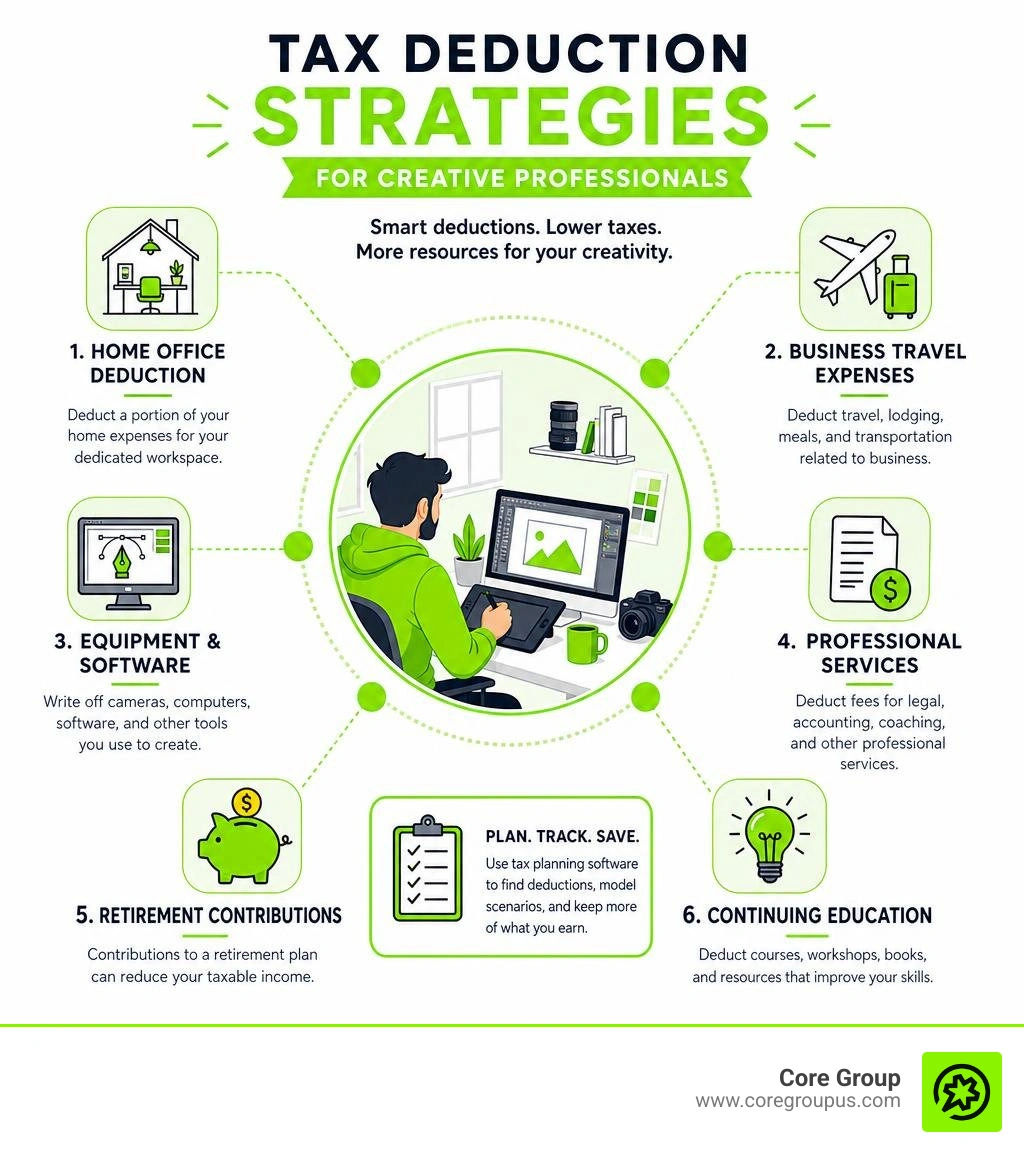
The software acts as an interactive guide, scanning your financial profile and suggesting specific strategies to lower your taxable income. For creative professionals and freelancers, this is especially valuable. The software can help you model the impact of the Qualified Business Income deduction, analyze the write-offs for your home office, and track your business travel expenses.
If you are a freelancer, utilizing these tools is a core part of Tax Planning for Freelancers. The software can help you determine if you should set up a retirement plan, such as a Solo 401k, to significantly reduce your current-year tax burden. It guides you through the complex math of self-employment taxes and income tax brackets, showing you exactly how much you can save by maximizing your legal deductions.
Understanding Pricing Models and Software Costs
Tax planning tools come in various shapes and sizes, and their pricing structures reflect the audiences they serve.
Some tools use subscription models, where you pay a monthly or annual fee to access the platform. Others, especially professional-grade tools used by advisors who collaborate with clients, might charge flat rate pricing or use pay per use credits for scanning and analyzing returns.
Here is a look at the pricing landscape for tax planning and preparation tools in 2026.
| Software Category | Target Audience | Estimated Cost | Pricing Structure |
|---|---|---|---|
| Basic tax preparation software | Individual taxpayers | Often starts under $100 for federal filing | Pay per filing |
| DIY tax planning software | Individual planners | Free basic tools or paid upgrades | Free tier or subscription |
| Household financial planning software | Individuals and families | Varies by provider | Annual subscription |
| Advisor assisted tax planning software | Advisors and individuals | Often starts under $50 per month | Monthly subscription |
| Professional tax planning platforms | Financial advisors and CPAs | Often several hundred to several thousand dollars per year | Annual subscription or flat rate per advisor |
| Retirement income planning platforms | Financial advisors | Often several thousand dollars per year | Flat rate per advisor |
| Comprehensive financial planning platforms | Financial planners | Often monthly or annual pricing | Monthly or annual subscription |
As you can see, professional-grade tools are designed for financial advisors and CPAs who perform tax planning on behalf of their clients. For individuals who want a hands-on approach, consumer-focused and advisor assisted tools can offer cost-effective ways to run your own scenarios.
Who Benefits Most From Proactive Tax Modeling
While everyone can benefit from basic tax planning, certain individuals stand to save a significant amount of money through proactive modeling.
High net worth individuals with complex investment portfolios benefit immensely from modeling capital gains, tax loss harvesting, and charitable giving strategies.
Freelancers and small business owners benefit by optimizing their business structures, managing their quarterly estimated payments, and utilizing business-specific deductions like the QBI Deduction Explained in detail.
Retirees and those approaching retirement benefit by planning their withdrawal sequencing, analyzing Roth conversions, and avoiding Medicare premium surcharges.
Lastly, individuals with investment properties can use software to model depreciation, 1031 exchanges, and the tax impact of rental income.
Frequently Asked Questions About Personal Tax Planning
Navigating personal tax planning often brings up a variety of frequently asked questions. Getting the right tax planning help can resolve common concerns and give you the confidence to make smart financial decisions.
Can tax planning software handle future tax law changes
Yes, reputable tax planning software is designed to incorporate legislative updates, shifting tax brackets, and annual inflation adjustments.
Unlike static spreadsheets, cloud-based tax planning tools are updated by software developers and tax experts whenever the federal or state governments pass new tax laws. This means you can model scenarios several years into the future with reasonable confidence, knowing the software is using the most accurate projections available for future tax brackets and standard deductions.
How accurate are the calculations in automated tax tools
Automated tax tools offer incredibly high calculation precision, but their accuracy ultimately depends on the quality of the data you input.
These tools are programmed to maintain strict tax code compliance, and they are excellent at handling complex, interlocking tax rules. However, software cannot replace professional judgment. If you input incorrect financial data or misunderstand how a specific tax rule applies to your unique situation, the software's output will be flawed. It is always a good idea to have a professional review your long-term tax plans.
What are the main limitations of doing your own tax planning
While software is incredibly powerful, doing your own tax planning has some distinct software constraints.
First, software is built on logic and rules, which means it may struggle to interpret highly complex situations that require subjective professional oversight. For example, if you are dealing with multi-state business income, international tax treaties, or complex estate planning, the software might not capture every nuance.
Second, there is the risk of user error. Without a deep understanding of tax law, you might select the wrong optimization strategy or miss key compliance requirements. Software is a tool to assist you, but it works best when paired with professional expertise.
Conclusion
Tax planning does not have to be a stressful, confusing chore. With the right tax planning software for individuals, you can turn a complex financial task into an empowering experience that helps you keep more of your hard-earned money.
At Core Group, we help creative entrepreneurs, freelancers, and agency owners take control of their financial futures. We combine our financial expertise with a no-fluff, profit-first playbook that guarantees peace of mind and saves you valuable time. We want you to focus on what you do best, creating amazing work, while we handle the complex tax and financial strategies behind the scenes. We even back our services with our signature MacBook Pro guarantee.
If you are ready to stop guessing and start optimizing, learn more about how we can support your journey by exploring Core Group Tax Planning today.