Colorado Financial Planner Guide: Navigating Your Mile-High Money Goals
Why Finding the Right Financial planner in Colorado Can Change Everything
Looking for a financial planner in Colorado? Here are the most important things to know right away.
- What they do, Colorado financial planners help with budgeting, taxes, retirement, investments, and business growth
- Key credentials to look for, CFP (Certified Financial Planner), CPA, and fiduciary status matter most
- Main fee structures, fee-only (flat fee or hourly), fee-based (fee plus commissions), or commission-only
- How to verify them, check FINRA BrokerCheck or the SEC's adviser database to confirm credentials and fiduciary duty
- Average cost, most charge 1 percent of assets under management per year, though flat-fee options can save high-net-worth clients thousands annually
Colorado has a strong and growing financial planning community. The Financial Planning Association of Colorado alone supports over 100 CFP professionals across the state. And nearly 45,000 advisors were evaluated for the 2025 Forbes Best-In-State Wealth Advisors list, with Colorado firms among those recognized.
But if you run a creative business, like a film production company or media studio, the standard financial planner may not be the right fit. Most planners are built for retirees or corporate executives, not for people with variable income, irregular tax situations, and fast-moving business finances.
That gap is exactly what this guide addresses. Whether you need someone to untangle your business taxes, manage cash flow chaos, or build a long-term wealth plan that actually fits your creative life, this breakdown will help you find the right partner.

Essential Financial planner Colorado terms include S corp payroll rules and budgeting for entrepreneurs.
Services Offered by a Financial planner Colorado Professionals Trust
When you begin searching for a Financial planner Colorado business owners and families recommend, you will find that services vary widely. Standard financial planners often focus on retirement planning, investment management, and insurance solutions. They help you build an investment portfolio, select life insurance, and plan for your eventual retirement.
However, if you are an entrepreneur, your personal wealth is deeply connected to your business. You cannot easily separate your personal life from your business finances. That is why modern boutique firms offer a more comprehensive approach that integrates personal wealth with business strategy.

A truly comprehensive financial plan goes beyond basic investment advice. It should address your entire financial landscape, including cash flow management, risk mitigation, and strategic growth. When you work with the right partner, you get a customized roadmap that addresses both your immediate business needs and your long-term personal goals. This integrated approach ensures that every dollar you earn in your business is working toward your personal financial freedom.
We believe that a great financial strategy should cover several core pillars, especially if you run a creative agency or a fast-growing business. These pillars include active cash flow management, growth coaching, and advanced tax planning. Let us look at how these services help you build real momentum.
Cash Flow Management and Business Growth Strategies
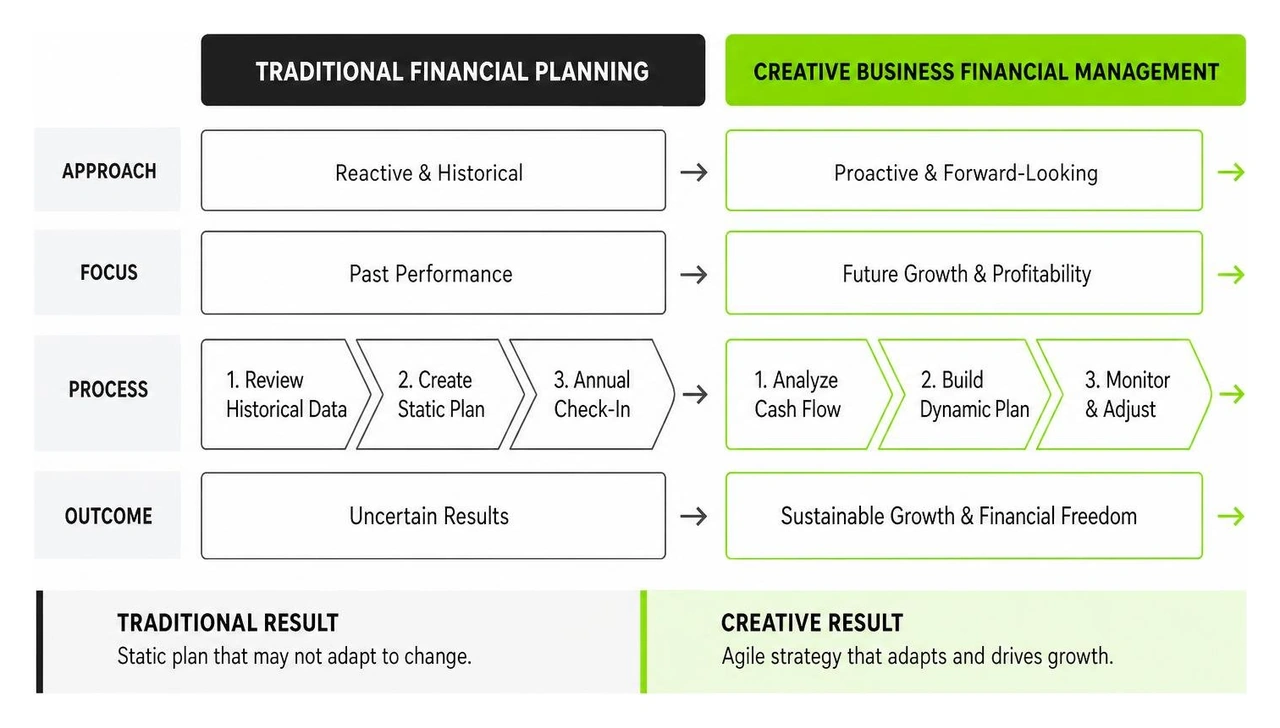
Many business owners make great money but still wonder where it all goes at the end of the month. Traditional financial planning often relies on static, straight-line estimates that assume your income will be perfectly predictable. But in the creative and entrepreneurial worlds, income fluctuates. You might have a massive launch one month followed by a quiet quarter.
That is why we emphasize active cash flow analysis and profit planning. Instead of just looking backward at historical financial statements, we help you build forward-looking projections. This allows you to set up financial guardrails that protect your business during lean times and help you maximize profit during high-earning seasons.
Through proactive business financial planning, we help you design a budget that actually works for your business. We look at your overhead, your team costs, and your personal income needs to create a sustainable growth strategy. This gives you the clarity to make big decisions, like hiring a new creative director or investing in new equipment, with absolute confidence.
Tax Planning and Business Tax Strategies
Taxes are often the single largest expense for any successful business owner in Colorado. Unfortunately, many business owners only think about taxes in April. By then, it is too late to make any meaningful changes to your tax liability.
True tax planning is a year-round strategy. We look at your business structure, your revenue, and your personal goals to find legal ways to minimize what you owe. Whether you need personal tax advice to manage your household wealth or advanced tax planning strategies to optimize your business entity, proactive planning is essential.
Our team focuses on helping you understand how to save on taxes by implementing smart, proactive systems. This includes analyzing whether an S-Corporation election makes sense for your business, setting up tax-advantaged retirement accounts, and utilizing state-specific tax credits. By putting these strategies to minimize taxes to work, you can keep more of your hard-earned money in your business and your personal accounts.
Understanding Advisor Credentials and Fiduciary Status
As you search for a Financial planner Colorado expert, you will quickly realize the financial industry is full of confusing alphabet soup. You will see designations like CFP, ChFC, CPA, and EA. Understanding what these credentials mean, and whether your advisor is a fiduciary, is critical to protecting your wealth.
A fiduciary is legally obligated to act in your best interests at all times. This might sound obvious, but many financial professionals are actually registered representatives or brokers. They are only held to a suitability standard, which means they can recommend products that pay them higher commissions, as long as the product is generally suitable for you.
To verify an advisor's regulatory background, you can use online tools provided by the SEC and FINRA. Checking these databases helps you review an advisor's history, licensing, and any past customer disputes. For a deeper dive into what to look for, you can read this guide on Choosing A Financial Planner from the Department of Banking.
Key Professional Designations to Look For
When you are trusting someone with your hard-earned money, credentials matter. Here are the most respected professional designations in the industry.
- Certified Financial Planner (CFP), CFP professionals must meet rigorous education, experience, and ethical standards. They are trained in comprehensive financial planning, including investments, retirement, and estate planning.
- Certified Public Accountant (CPA), CPAs are licensed tax experts who specialize in accounting, tax preparation, and corporate tax strategy.
- Enrolled Agent (EA), EAs are federally authorized tax practitioners who have technical expertise in taxation and are empowered by the U.S. Department of the Treasury to represent taxpayers before the IRS.
- Certified Profit First Professional, These professionals specialize in helping business owners implement cash flow systems that guarantee profitability from day one.
Choosing an advisor who holds these designations ensures you are working with someone who has committed to the highest standards of professional competence and ethical conduct.
Financial Planner Versus Financial Management Partner
Many people assume they need a traditional financial planner when what they really need is a dedicated financial management partner. A standard financial planner typically focuses on long-term wealth accumulation, asset allocation, and retirement accounts. They want to manage your investments and help you build a nest egg for the future.
A financial management partner, on the other hand, acts as an extension of your daily business operations. We do not just look at your retirement accounts; we roll up our sleeves and handle your bookkeeping, monthly financial reporting, and ongoing tax strategies.
For creative entrepreneurs and boutique firms, this hands-on support is a game-changer. It bridges the gap between daily business cash flow and long-term wealth building. Instead of getting a generic financial plan once a year, you get continuous, real-time guidance that helps you run a more profitable business every single day.
Comparing Fee Structures and Costs
How financial planners get paid is one of the most important factors in your decision. It directly impacts the advice you receive and the overall cost of your financial plan. The table below outlines the three main compensation models you will encounter in Colorado.
| Fee Structure | How It Works | Typical Costs | Best For |
|---|---|---|---|
| Fee-Only | You pay the advisor directly via a flat fee, hourly rate, or percentage of assets. They accept no commissions. | $2,500 to $7,500 for a flat fee plan, or 1 percent of assets under management. | Clients who want unbiased advice with zero product-sales conflicts. |
| Fee-Based | You pay a fee for the plan, but the advisor can also earn commissions from selling specific financial products. | Varies widely based on the products sold and assets managed. | Clients who want a blend of planning and insurance product implementation. |
| Commission-Based | You pay nothing upfront, but the advisor earns commissions from the financial products you buy. | Built into the cost of the mutual funds, annuities, or insurance policies. | Clients with basic needs who only want to buy specific insurance or investment products. |
Finding a Fee Only Financial planner Colorado Residents Trust
Many clients prefer working with a fee-only advisor because it aligns incentives. Under this model, the advisor does not sell insurance policies, mutual funds, or annuities for a commission. Instead, they are compensated solely by the fees you pay them directly.
Some fee-only planners use an advice-only model. This means they charge a transparent flat fee to build your financial plan, and you retain full control over your investment accounts. This approach can save high-net-worth business owners thousands of dollars a year compared to traditional assets under management fees.
When you work with a fee-only partner, you can focus on building strategies to minimize taxes and growing your wealth without worrying about hidden sales agendas. It provides a level of transparency that makes it much easier to build a trusting, long-term relationship.
Fee Based and Commission Based Models Explained
While the fee-only model is highly transparent, many advisors in Colorado operate under fee-based or commission-based models. A fee-based advisor might charge you a flat fee to write a comprehensive financial plan, but they may also earn a commission if they help you set up a specific life insurance policy or buy a variable annuity.
Commission-based advisors, on the other hand, are often compensated entirely through product sales. While this can make the initial planning process feel free, the costs are often built into the financial products themselves. This can sometimes create a conflict of interest, as the advisor may be tempted to recommend products that offer the highest commission.
Understanding these differences helps you evaluate the advice you receive. If your goal is to learn how to save on taxes and build a highly efficient business, you want to ensure your advisor's interests are perfectly aligned with your own.
Frequently Asked Questions About Colorado Financial Planning
Choosing a financial partner is a major milestone. To help you navigate this process, we have compiled some of the most common questions clients ask when looking for a financial planner in Colorado.

What should I expect during the initial consultation
Your first meeting with a financial planner should be a low-pressure, collaborative conversation. Most reputable firms offer a complimentary consultation to see if you are a good fit for each other.
During this meeting, the advisor will ask about your current financial situation, your business goals, and your long-term personal objectives. They will likely review your recent tax returns and financial statements to get a clear picture of your cash flow. By the end of the conversation, you should have a clear understanding of how they can help you and what your next steps will be.
How do I verify an advisor fiduciary status
Do not hesitate to ask a prospective advisor if they are a fiduciary. A true fiduciary will gladly put this commitment in writing.
You can also verify their status by reviewing their Form ADV, which is a document registered investment advisers must file with the SEC and state regulators. This form discloses their fee structure, services, and any potential conflicts of interest. You can search for this information on the SEC's Investment Adviser Public Disclosure website.
Questions to Ask a Potential Financial planner Colorado Expert
To ensure you find the perfect fit for your needs, we recommend asking a few key questions during your initial consultation.
- How do you get compensated, and do you receive any commissions or referral fees?
- Do you have experience working with creative entrepreneurs and business owners?
- Will you help me manage my daily business bookkeeping and tax preparation, or do you only focus on investments?
- How often will we meet to review my progress and adjust our strategies?
These questions will help you cut through the marketing fluff and find a partner who truly understands your unique business model.
Conclusion
At the end of the day, finding a Financial planner Colorado business owners trust is about finding peace of mind. As a creative entrepreneur, you do not have time to get bogged down in messy spreadsheets, confusing tax codes, and complex investment jargon. You need to focus on what you do best, creating incredible work and growing your business.
We built our team to be the ultimate financial management partner for creative minds. We do not offer generic, cookie-cutter financial advice. Instead, we deliver a no-fluff, profit-first playbook that guarantees peace of mind and saves you hours of administrative headache every single week.
We are so confident in our ability to streamline your finances that we back our services with our unique MacBook Pro guarantee. If we do not save you time and deliver absolute clarity, we will make it right.
If you are ready to stop stressing over your cash flow and start building real, lasting wealth, let us help you take the next step. Explore our resources/tax planning hub today, or reach out to our team to see how we can help you achieve your mile-high money goals.