The Ultimate Guide to Finding Trustworthy Personal Tax Advice
Why Getting Personal Tax Advice Right Can Save You Thousands
Personal tax advice helps you legally reduce what you owe, avoid costly mistakes, and build a smarter financial future. Here is a quick breakdown of what to know before diving deeper
What good personal tax advice covers
- Proactive tax planning throughout the year, not just at filing time
- Strategies to lower your taxable income (retirement contributions, HSA accounts, deductions)
- Handling complex situations like self-employment, rental income, or equity compensation
- Coordinating taxes with your investment, estate, and wealth management goals
- Choosing the right qualified advisor for your specific situation
- Accessing free resources like VITA if you earn $69,000 or less
Taxes are confusing. And if you are a creative professional running your own business, they can feel completely overwhelming.
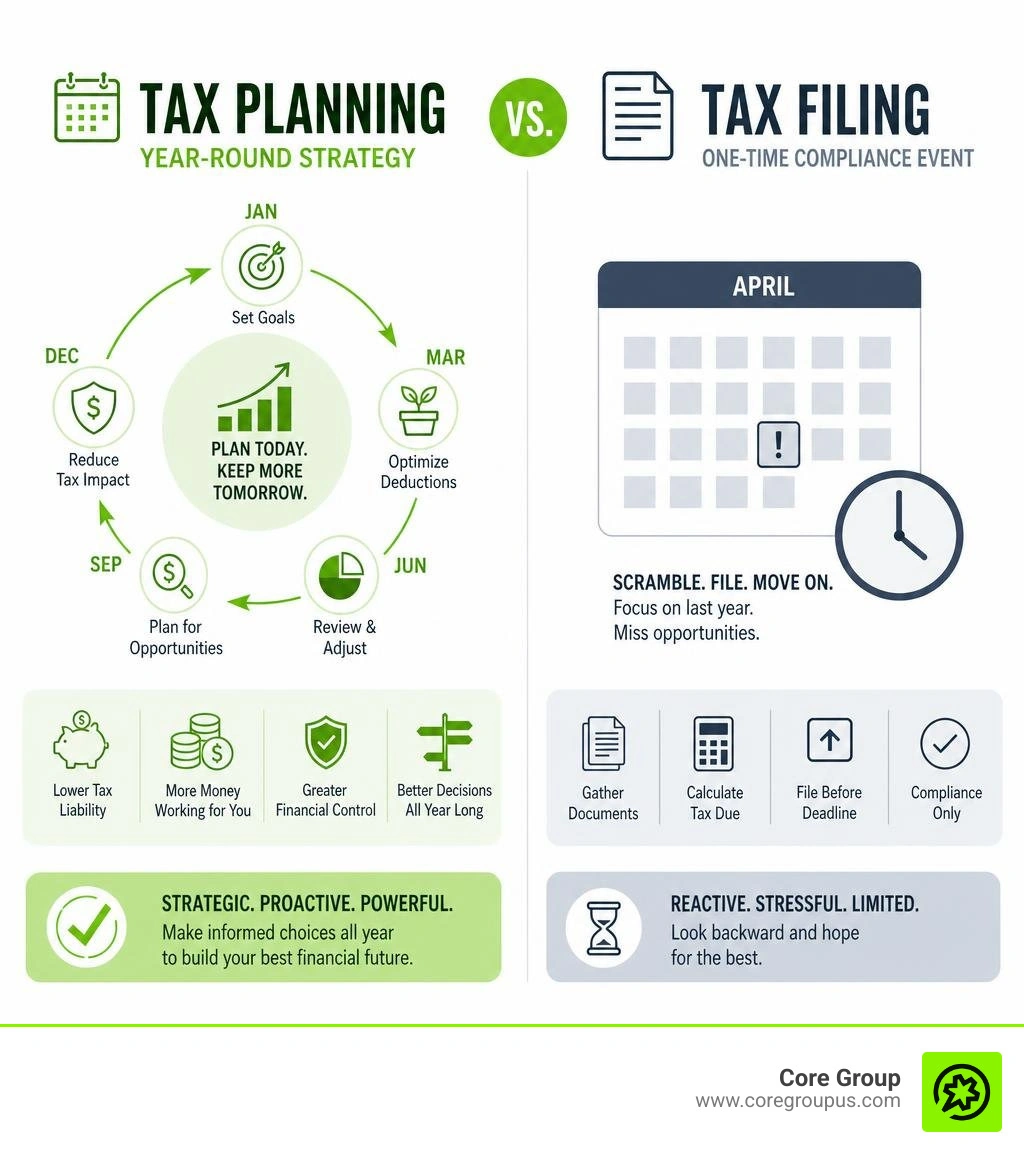
Most people think about taxes once a year, scramble to gather documents in April, and hope for the best. But that approach costs real money. Decisions made in January rarely create as much opportunity as decisions made in March, June, or October of the prior year.
The average American tax refund in the 2024 filing season was $3,453. That sounds great until you realize a large refund often means you gave the government an interest-free loan all year. With the right advice, that money could have been working for you sooner.
Whether you are a freelancer juggling 1099s, a rental property owner, or someone who just sold a business, the stakes of getting personalized tax guidance are high. As Albert Einstein reportedly put it, "The hardest thing in the world to understand is the income tax." He was not wrong.
This guide cuts through the complexity so you know exactly where to turn.
Simple guide to personal tax advice terms
Why Proactive Personal Tax Advice Matters Year Round

Many people view tax preparation as a once-a-year chore. They gather their receipts in April, hand them to a professional, and hope they do not owe too much. This reactive approach often leaves significant money on the table. When you limit your tax activities to filing season, you miss out on the most powerful ways to lower your liability.
True tax efficiency requires year-round attention. By analyzing your financial situation continuously, you can make informed choices that directly impact your tax liabilities and cash flow. Proactive tax advisory services help you map out your financial decisions in real time. This ensures that every move you make aligns with your long-term goals.
Evaluating your options before the tax year ends allows you to implement smart Strategies to Minimize Taxes before it is too late. Once December 31 passes, most opportunities to impact your current-year tax bill disappear. Engaging in continuous planning helps you maintain control over your finances and avoid stressful surprises.
Moving Beyond Seasonal Tax Filing
A seasonal approach to taxes focuses solely on compliance. It answers the question of what happened in the past. In contrast, a proactive strategy asks where you are going and how you can structure your activities to get there tax-efficiently. This shift in perspective is essential for lowering your lifetime tax burden.
Working with an expert financial team allows you to build a comprehensive plan that integrates your business and personal life. Instead of treating your tax return as an isolated document, we look at how your business structure, investments, and personal assets interact. This holistic view is the foundation of learning How to Save on Taxes over your entire lifetime.
Managing Estimated Taxes and Quarterly Payments
If you have income that is not subject to withholding, you must understand estimated taxes. This includes self-employment earnings, significant investment gains, or rental income. The IRS expects taxpayers to pay their tax liability as they earn income throughout the year.
Failing to make sufficient quarterly payments can result underpayment penalties. Proper cash flow planning helps you calculate these payments accurately. This ensures you keep enough cash in your business or personal accounts to cover your obligations without disrupting your daily operations. Regular check-ins with your advisor help you adjust these payments as your income fluctuates, keeping you compliant while optimizing your liquid cash.
Navigating Complex Tax Situations with Expert Guidance

As your career and investments grow, your tax situation naturally becomes more complex. What worked when you had a single W-2 job will not suffice when you juggle multiple revenue streams. Complex situations demand specialized knowledge to ensure you remain compliant while protecting your hard-earned wealth.
Whether you are dealing with stock options, managing rental properties, or earning international income, standard retail tax software often falls short. These situations require a human touch and strategic oversight to navigate the overlapping federal, state, and local tax rules.
Tax Planning for Business Owners and Freelancers
Running your own business brings incredible freedom, but it also introduces self-employment tax challenges. Business owners and freelancers must navigate the complexities of Schedule C filing, pass-through entity rules, and K-1 reconciliation.
Understanding how different business structures affect your personal return is critical. For example, utilizing specialized strategies can help you maximize deductions like the Section 199A deduction. You can learn more about this by reading our guide where the QBI Deduction Explained breaks down the qualifications.
Additionally, managing your business expenses and understanding the official Earned Income Definition will help you structure your compensation tax-efficiently. We specialize in helping creative professionals design a clear roadmap that connects their business bookkeeping directly to their personal tax returns. This eliminates guesswork and ensures you only pay what you truly owe.
If you are operating as an independent contractor, implementing dedicated Tax Planning for Freelancers can save you thousands of dollars annually.
Managing Equity Compensation and Real Estate Investments
If your compensation package includes stock options, restricted stock units, or incentive stock options, the timing of your decisions is everything. Exercising options or selling shares without a clear plan can trigger massive, unexpected tax events, including the Alternative Minimum Tax. Tracking your cost basis and choosing the right moment to sell requires careful modeling.
Similarly, real estate investments offer excellent tax advantages, but they come with strict compliance rules. Landlords must understand how to maximize depreciation, handle passive activity loss limitations, and claim allowable rental expenses. Properly managing these elements directly impacts the final AGI on Tax Return calculations, which determines your eligibility for various other tax credits and deductions.
Advanced Wealth Transfer and Tax Efficiency Strategies
For high-net-worth families and successful business owners, tax planning extends beyond the current year's income tax. It encompasses long-term wealth transfer, estate planning, and charitable giving. Coordinating these elements ensures that you can protect your assets and pass them on to the next generation with minimal tax friction.
Using the right legal vehicles can shield your wealth from unnecessary taxation while supporting your family's personal values and philanthropic goals.
Comparing Wealth Transfer Vehicles
When planning how to transfer wealth, three common vehicles are family partnerships, private foundations, and trusts. Each serves a distinct purpose and offers different levels of asset protection and tax control.
The following table outlines the key differences between these structures to help you understand which might fit your long-term goals.
| Wealth Transfer Vehicle | Primary Purpose | Tax Advantages | Asset Protection Level |
|---|---|---|---|
| Family Partnerships | Managing family business assets and transferring ownership gradually | Valuation discounts on transferred shares | High protection from external creditors |
| Private Foundations | Structured family philanthropy and charitable giving | Immediate income tax deductions for contributions | Moderate protection based on foundation rules |
| Trusts | Directing the distribution of assets to beneficiaries over time | Can reduce estate tax exposure and bypass probate | Very high depending on trust terms |
Choosing the right structure depends entirely on your family's unique situation, financial goals, and wealth preservation needs.
Integrating Charitable Giving and Wealth Management
Charitable giving is a powerful tool for reducing your tax burden while making a positive impact on society. Instead of making simple cash donations, advanced strategies like donor-advised funds allow you to maximize your deductions.
By donating appreciated assets like stocks directly to a donor-advised fund, you can avoid capital gains taxes while claiming a charitable deduction for the full fair market value. Integrating these gifting strategies with your broader portfolio tax efficiency analysis ensures your investments and philanthropic goals work together seamlessly.
Understanding Recent Tax Law Changes and Regulatory Reforms
Tax laws are never static. Staying ahead of federal and state-level regulatory changes is vital for maintaining an effective tax strategy. Recent legislative shifts have altered standard deductions, itemized limitations, and corporate tax rates, making old strategies obsolete.
For example, taxpayers must monitor state-specific administrative updates, such as the guidance issued on the Individual Income Tax – Arkansas Department of Finance and Administration page, to ensure local compliance.
Federal Tax Law Shifts
At the federal level, provisions from the Tax Cuts and Jobs Act continue to influence individual tax planning. As certain provisions approach their scheduled expiration dates, proactive planning is crucial to avoid sudden tax increases.
Additionally, newer legislative updates, such as the One Big Beautiful Bill Act, have introduced fresh guidelines for business deductions and charitable provisions. Keeping a close eye on these shifts and understanding how they affect the Tax Brackets 2024 Married Jointly helps you adjust your income timing strategies before the year ends.
State Level Tax Conformity and Reforms
State tax laws do not always align perfectly with federal changes. Each state decides how and when to conform to federal tax code updates. This lack of uniformity can create hidden compliance risks, especially for multi-state filers or remote workers.
For instance, taxpayers moving to or operating in California must navigate specific guidelines, which you can explore on the page for Getting Professional Help with Taxes - CDTFA - CA.gov. Working with an advisor who understands these local variations prevents costly state-level errors.
Free and Low Cost Tax Preparation Resources
Not everyone needs to hire a private CPA firm to handle their annual filing. If your financial situation is straightforward, several free or low-cost options are available to help you stay compliant without spending a fortune.
These programs rely on IRS-certified volunteers who receive extensive training to ensure your return is prepared accurately.
Volunteer Income Tax Assistance and Tax Counseling for the Elderly
The Volunteer Income Tax Assistance program has operated for over fifty years. This program offers free basic tax return preparation to individuals who generally make $69,000 or less, persons with disabilities, and limited English-speaking taxpayers.
For older adults, the Tax Counseling for the Elderly program specializes in pension and retirement-related questions for taxpayers aged sixty and older. These programs ensure that qualifying taxpayers can file their federal and state returns securely and accurately.
If you live in Colorado, you can find local resources through the Community Tax Help | Department of Revenue - Colorado Taxes portal.
For those residing in Connecticut, the Free Income Tax Assistance - CT.gov page provides details on local volunteer sites.
Additionally, taxpayers in Arizona can access state-specific help through the Free Tax Return Preparation | Arizona Department of Revenue resource.
How to Choose a Qualified Tax Advisor
If your financial situation involves more than a simple W-2, finding the right professional is one of the most important financial decisions you will make. However, not all tax professionals offer the same level of service or expertise.
Understanding the difference between a standard tax preparer and a credentialed advisor is the first step toward getting high-quality personal tax advice.
Finding Trustworthy Personal Tax Advice for Complex Filers
For individuals with complex assets, international income, or business entities, a standard seasonal preparer is rarely enough. You need someone with specialized expertise who can coordinate your tax strategy with your broader wealth management goals.
If you reside in Alabama, you can search for local consulting options like the Prattville Alabama Tax Planning & Consulting Services to find regional support.
For those in Alaska, specialized services like Alaska CPA Tax Preparation - Altman, Rogers & Co. offer deep local and national expertise.
If you are looking for comprehensive, ongoing support across other states, exploring Affordable Accounting, Bookkeeping, Tax, & Payroll Services can connect you with the right team to handle your books and filings seamlessly.
Red Flags to Avoid When Seeking Personal Tax Advice
When searching for a tax professional, watch out for warning signs that indicate a lack of professionalism or potential ethical issues. Avoid preparers who base their fees on a percentage of your refund or who guarantee a specific refund amount before reviewing your documents.
Additionally, ensure your preparer has a valid Preparer Tax Identification Number and signs your return. Unregulated preparers who refuse to sign your documents leave you solely responsible for any errors or audits.
Frequently Asked Questions about Personal Taxes
What is the difference between a CPA and a standard tax preparer
A Certified Public Accountant has met rigorous education, experience, and testing requirements mandated by state licensing boards. CPAs are authorized to represent you before the IRS during an audit and can provide strategic, forward-looking tax planning.
In contrast, a standard tax preparer may only have basic training focused on seasonal data entry. They can help you file your current return, but they rarely have the credentials or expertise to build a long-term strategy that reduces your lifetime tax burden.
How can I reduce my adjusted gross income this year
You can lower your adjusted gross income by contributing to tax-advantaged accounts like a traditional 401k, 403b, or a traditional IRA. Additionally, contributing to a Health Savings Account offers a triple tax advantage, as contributions are tax-deductible, growth is tax-free, and withdrawals for qualified medical expenses are also tax-free.
You can also look into itemizing your deductions if your total qualified expenses exceed the standard deduction. For example, understanding the rules around the Amount of Medical Expenses for Tax Deduction 2023 can help you determine if your medical costs are high enough to help lower your tax bill.
Who qualifies for free tax preparation services
Taxpayers who earn $69,000 or less generally qualify for the IRS-sponsored VITA program. Additionally, individuals with disabilities or limited English-speaking abilities are eligible. Seniors aged sixty and older can access free specialized help through the TCE program, which focuses on retirement and pension questions.
Conclusion
Navigating personal taxes does not have to be a source of constant stress. At Core Group, we understand that creative entrepreneurs and business owners want to focus on their passion, not on decoding the tax code. That is why we designed our financial management, bookkeeping, and tax services specifically for you.
We reject the typical, confusing jargon of the financial industry. Instead, we provide a no-fluff, profit-first playbook that guarantees peace of mind and saves you valuable time. We are so confident in our ability to streamline your finances that we back our services with our unique MacBook Pro guarantee.
Let us handle the numbers so you can focus on building your business and enjoying your creative freedom. Get started with professional tax planning today and experience the difference that proactive, expert guidance can make for your financial future.