Demystifying Payroll and Benefits: What Every New Employee Needs to Know
What Payroll and Benefits Actually Mean for You
Payroll and benefits are the two core parts of how you get compensated at work and understanding them can save you real money and stress.
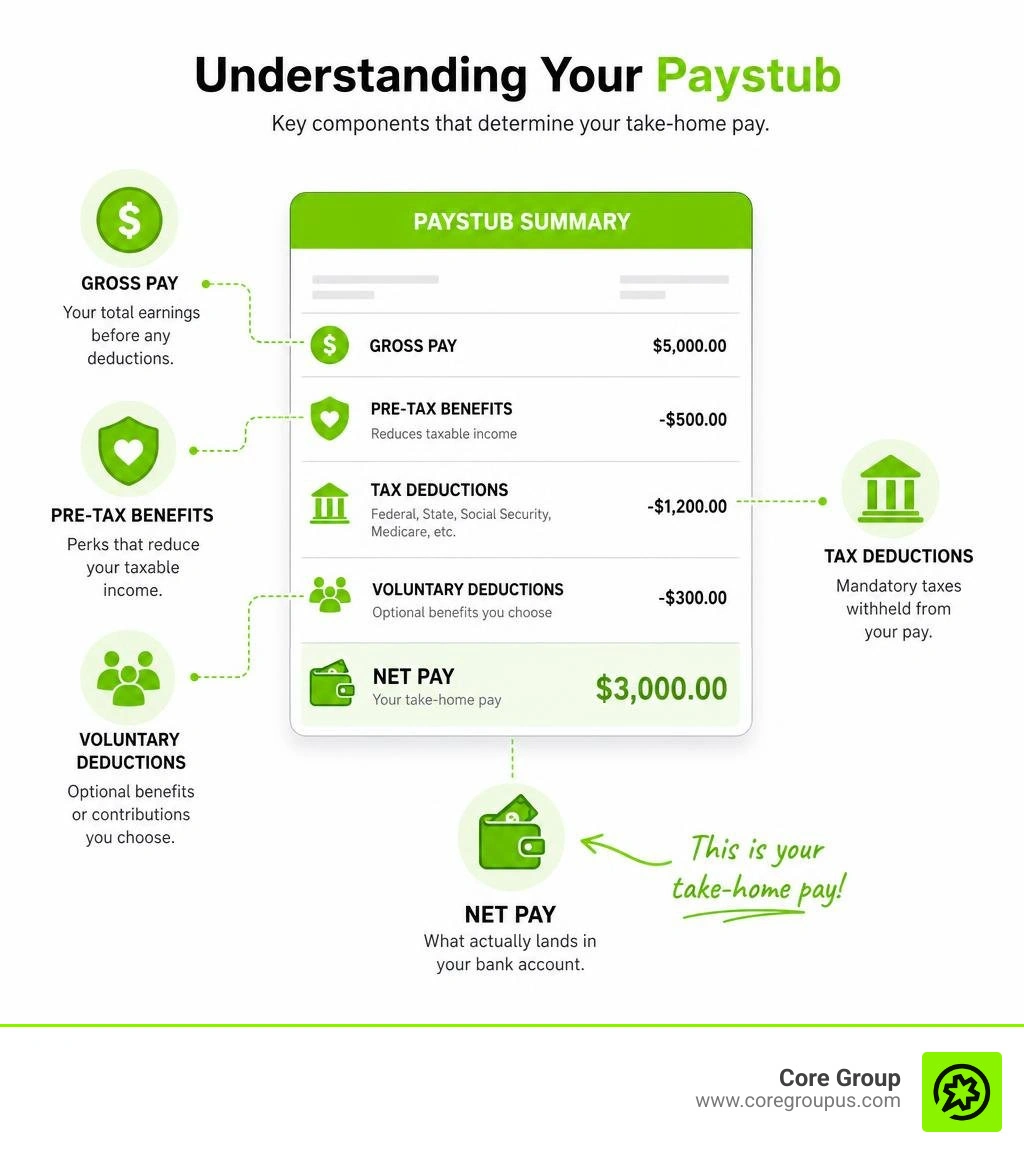
Here is a quick breakdown before we dive deeper
| Term | What It Means |
|---|---|
| Payroll | The system your employer uses to calculate and pay your wages |
| Benefits | Non-wage compensation like health insurance, retirement, and paid leave |
| Gross Pay | Your total earnings before any deductions |
| Net Pay | What actually lands in your bank account after taxes and deductions |
| Pre-tax Benefits | Perks that reduce your taxable income (like a 401k or HSA) |
| Mandatory Benefits | Benefits required by law, like Social Security and Medicare |
| Voluntary Benefits | Optional extras your employer chooses to offer |
If you are a creative entrepreneur or someone just stepping into a new role, this stuff can feel overwhelming fast. Taxes get withheld. Deductions appear. Numbers on your paystub do not match what you expected.
You are not alone in that confusion.
Three in four employees say voluntary benefits are a deciding factor in whether they take or stay in a job. Yet most people never fully understand what they are actually receiving and leaving on the table.
This guide breaks it all down in plain language, so you can make smarter decisions about your compensation without needing a finance degree.
Quick payroll and benefits definitions
What Are Payroll Benefits and How They Differ From Wages
When you think of your job, your mind probably goes straight to your salary or hourly wage. That hourly rate or annual salary is your direct compensation. However, a complete compensation package includes indirect compensation, which is where payroll and benefits come into play.
Wages are the cash payments you receive for the hours you work or the output you produce. Benefits are the additional forms of value your employer provides. Together, they create your total rewards package. This package is designed not just to pay you for your labor, but to support your overall employee wellness, financial stability, and long-term security.

The Role of Payroll and Benefits in Total Compensation
Many employees make the mistake of looking only at the net pay on their paycheck. While cash is essential, your benefits package can represent up to thirty or forty percent of your total compensation.
For example, health insurance is a massive financial shield. In fact, eighty-eight percent of employers consider health insurance one of the most important parts of their benefits strategy. Without it, a single medical emergency could derail your personal finances.
Retirement plans are another crucial element of financial wellness. Research shows that sixty-four percent of Americans are more afraid of outliving their money than of dying. While seventy-five percent of workers in the United States have access to retirement plans, only fifty-seven percent are actually enrolled. The average 401k balance hovers around $132,300, which highlights the importance of starting early and taking advantage of any employer matching programs.
Understanding these components gives you leverage during job offers and salary negotiation. You might accept a slightly lower base salary if the employer offers top-tier health coverage, generous retirement matching, and robust wellness programs.
Mandatory Versus Voluntary Benefits
Not all benefits are created equal. Some are required by the federal or state government, while others are optional perks designed to attract top talent.
| Benefit Category | Examples | Who Pays |
|---|---|---|
| Mandatory | Social Security, Medicare, Unemployment Insurance, Workers Compensation, FMLA | Funded by employer taxes, employee payroll deductions, or both |
| Voluntary | Health Insurance, Dental, Vision, 401k Matching, LSAs, Student Loan Repayment | Funded by employee pre-tax deductions, employer contributions, or a split |
Mandatory benefits are strictly regulated. Federal Insurance Contributions Act, also known as FICA taxes, require both you and your employer to contribute to Social Security and Medicare. Unemployment insurance provides temporary financial assistance if you lose your job through no fault of your own, while workers compensation covers medical care and income replacement if you get injured on the job. The Family and Medical Leave Act, or FMLA, guarantees job-protected, unpaid leave for specific family and medical reasons.
Voluntary perks are where employers get creative to build a strong brand. A rising trend in July 2026 is the use of Lifestyle Spending Accounts, also known as LSAs. Sixty-three percent of employers offering customizable benefits now use broad LSAs that span multiple categories, boasting an impressive median utilization rate of eighty-seven percent. These accounts allow you to spend a set stipend on wellness, fitness, or even pet care, offering much higher personalization than traditional, rigid perks.
Global Variations in Employee Benefits
If you work for a global company or manage a team across borders, you will quickly find that employee benefits vary wildly by country.
In Sweden and Germany, statutory leave for parents can span a year or more of job-protected time off. In the United Kingdom, employees are entitled to a minimum of twenty-eight paid vacation days, and employers must navigate statutory sick pay and mandatory pension contributions.
In Norway, mothers can receive forty-nine weeks of fully paid maternity leave. Meanwhile, New Zealand offers twenty-six weeks of primary care leave. In contrast, the United States relies heavily on voluntary employer-provided coverage for things like healthcare and paid parental leave, making your choice of employer incredibly important.
Understanding Your Payroll and Benefits Package
Navigating your benefits administration process can feel like learning a foreign language, especially during your first week on the job. Most modern companies use online portals to help you manage your selections.

How Payroll and Benefits Systems Work Together
Your payroll system and your benefits program are not separate silos. They are deeply integrated. When you enroll in health insurance, a retirement plan, or a commuter program, that information is sent directly to the payroll software.
This integration ensures that automated deductions happen correctly every single pay cycle. These deductions can be pre-tax or post-tax. Pre-tax deductions, like your 401k contributions or Health Savings Account deposits, are taken out of your gross pay before taxes are calculated. This lowers your taxable income, saving you money on your tax bill. Post-tax deductions, like certain disability policies or voluntary life insurance, are taken out after taxes have been calculated.
Using modern platforms simplifies this process. For instance, you can explore how top platforms handle these connections by checking out Best Benefits Administration Software | Rippling or Full-Service Payroll Services with Benefits and HR | Gusto. These systems reduce manual entry errors and ensure that your deductions match your enrollments perfectly.
How Different Organizations Manage These Systems
The way your pay and perks are handled depends heavily on the size and type of organization you work for.
Large institutions, like state universities, manage massive payroll operations. For example, a typical university payroll and benefits office might successfully schedule and conduct twenty-six bi-weekly payroll calculations, twelve monthly payroll calculations, and fifty-one payroll adjustment calculations every year to keep things running smoothly. They produce tens of thousands of W-2 forms and specialized tax documents like 1042-S forms for international employees.
Small businesses, on the other hand, often do not have dedicated internal departments to run these calculations. They frequently use external software or partner with a professional employer organization, which you can learn more about at PEO Software for HR, Benefits, and More | Rippling.
For small-scale operations, managing these rules is a critical part of business survival. We often help clients understand the nuances of HR and Payroll for Small Business to avoid costly compliance mistakes. If you are running a very small setup, you might even look into specialized guides like Micro Business Payroll or Small Business Payroll One Employee to keep your operations compliant and efficient. Utilizing modern SME Payroll Solutions helps growing teams scale without administrative headaches.
Tax Implications of Your Payroll Benefits
One of the best reasons to understand your benefits package is the tax advantage. Not all benefits are taxed the same way, and knowing the difference can help you keep more of your hard-earned money.
To keep your business or personal finances in order, staying on top of Payroll Tax Compliance is absolutely essential. For business owners, especially those structured as S corporations, there are specific guidelines to follow, which we cover in our guide on S-Corp Payroll Rules.
Taxable Versus Non Taxable Perks
The IRS has strict guidelines on which fringe benefits are taxable and which are non-taxable.
Non-taxable perks include
- Health insurance premiums paid by your employer.
- Health Savings Account contributions up to federal limits.
- Group life insurance coverage up to $50,000.
- Educational assistance up to $5,250 per year.
Taxable perks include
- Gym memberships or wellness stipends paid as cash.
- Personal use of a company vehicle.
- Achievement awards or cash bonuses.
By maximizing your non-taxable benefits, you can effectively increase your overall compensation without increasing your tax liability.
Compliance and Legal Considerations for Employers
For business owners, managing these tax rules is not just about keeping employees happy. It is about avoiding severe financial penalties.
IRS figures indicate that forty percent of small businesses are fined each year for incorrect payroll tax filing, paying an average penalty of $845 per year for late or incorrect filings. In fact, small businesses paid nearly $5 billion in penalties in a single year due to these administrative errors.
Whether you are paying a team or managing a household employee, using a structured payroll system is key. If you employ household help, you can review our Nanny Payroll Service California Guide 2026 to ensure you stay fully compliant with state and federal laws.
Frequently Asked Questions About Employee Compensation
Here are some of the most common questions we hear from employees trying to make sense of their paystubs and benefits portals.
Are payroll benefits taxable
Yes, some are, but many of the most valuable ones are not. Your health, dental, and vision insurance premiums, as well as contributions to a traditional 401k or Health Savings Account, are typically deducted pre-tax. This means they reduce your taxable income. However, lifestyle stipends, cash bonuses, and certain wellness perks are considered taxable income by the IRS and will be reflected on your W-2 form at the end of the year.
Can employees negotiate their voluntary benefits
Absolutely. While you cannot negotiate mandatory benefits like Social Security contributions, you can often negotiate voluntary perks during the hiring process. If a company cannot meet your target salary, you can ask for extra paid time off, flexible working hours, or professional development and tuition reimbursement.
What happens to benefits when an employee leaves a company
When you leave a job, your active employee benefits generally end on your last day of employment or at the end of that calendar month. However, you have rights. Under COBRA, you can choose to continue your health insurance coverage for up to eighteen months, though you will usually have to pay the full premium yourself. Your retirement account, like a 401k, remains yours, and you can roll it over into an Individual Retirement Account or your new employer's plan. Unused paid time off may be paid out to you, depending on your state laws and company policy.
Conclusion
At Core Group, we know that managing payroll, taxes, and employee perks can feel like a full-time job in itself, especially for creative entrepreneurs who want to spend their time building, designing, and creating.
That is why we offer a no-fluff, profit-first playbook designed to handle your bookkeeping, tax planning, and financial management. We give you complete peace of mind and save you hours of administrative headache, all backed by our MacBook Pro guarantee.
If you are ready to take control of your business finances, check out our comprehensive Bookkeeping Payroll Complete Guide 2026 or explore our Payroll Services Small Business Guide 2026 to find the right path forward for your team.
For tailored financial support that lets you focus on your craft while we handle the numbers, reach out to us today.