Payroll Management 101: HR Basics for Beginners
Payroll Management in HR Builds Trust and Control
Payroll management in HR is the process of collecting employee work and pay data, calculating wages and deductions, paying people on time, and keeping the required tax and payroll records.
For a creative business, it is more than an admin task. Each accurate paycheck helps protect cash flow, meet legal duties, and show your team that their work is valued. When payroll goes wrong, the impact is immediate. Research suggests that two payroll mistakes can cause almost half of employees to start looking for another job.
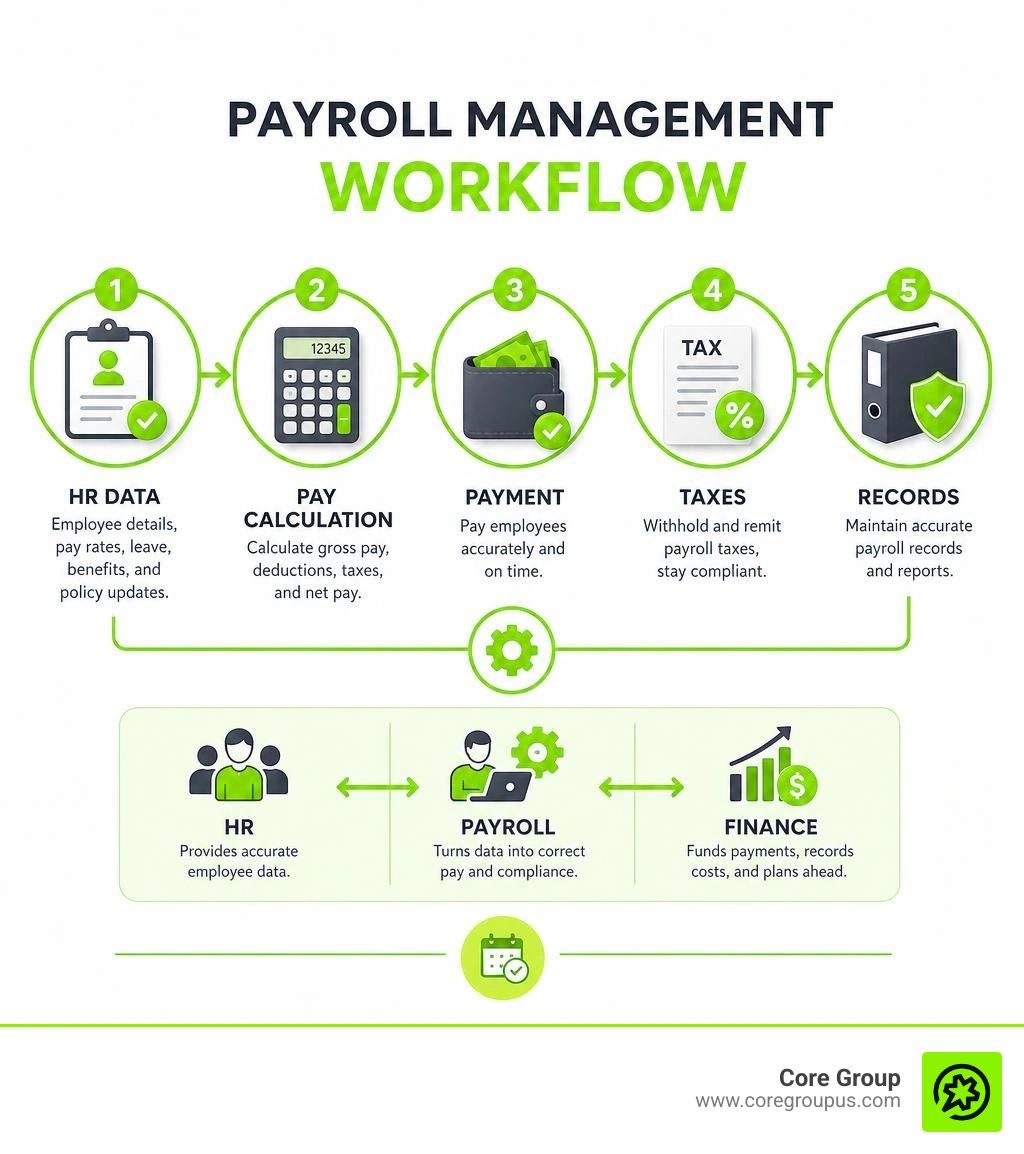
At a high level, payroll connects three parts of the business
- HR provides employee details, pay rates, leave, benefits, and policy changes.
- Payroll turns that information into correct gross pay, deductions, taxes, and net pay.
- Finance funds payments, records labor costs, and plans for future payroll expenses.
Good payroll management helps your business pay people accurately, stay compliant, and spend less time untangling spreadsheets when you would rather focus on the work you create.
I am Christian Brim, and in the sections ahead, I will break down the payroll basics in plain language.
Basic payroll management in hr terms include
Fundamentals of Payroll Management in HR
Managing payroll is one of the foundational duties in any organization. When we talk about payroll management in hr, we are discussing the administrative engine that turns hours worked into accurate compensation. For creative entrepreneurs and growing small business owners, payroll is far more than a mathematical routine. It represents the explicit agreement between employer and employee.
Compensation is the bedrock of company culture. While modern perks like breakroom snacks and team outings are pleasant, nothing impacts workplace trust faster than a late or inaccurate paycheck. Over 75 percent of American workers live paycheck to paycheck. A single missing payment or incorrect deduction can cause real financial distress for an employee.
A robust compensation strategy relies on well-structured salary schedules, clear hourly rates, and transparent rules for overtime and bonuses. When human resources handles these elements with structure and clarity, the entire organization benefits from increased stability and higher retention rates.

Differences Between HR and Payroll Functions
In many small businesses, human resources and payroll operations overlap continuously. However, understanding their distinct focus areas helps avoid operational confusion.
Human resources focuses on the broader employee lifecycle and people strategy. HR handles recruitment, onboarding, performance reviews, workplace policies, employee relations, and benefits administration. Payroll focuses on financial calculation, tax withholding, wage distribution, and statutory tax reporting.
The relationship between both areas requires seamless communication. When HR processes a promotion, updates a benefit selection, or records paid time off, that information must feed directly into payroll calculations. Miscommunication leads to errors like delayed onboarding paychecks or incorrect tax withholdings. Understanding how HR and payroll integration works allows companies to eliminate redundant data entry and establish a single source of truth for workforce records.
Core Objectives and Business Impact
The primary objective of payroll management is ensuring that every team member receives exact earnings on time while fulfilling federal, state, and local tax requirements. When done correctly, payroll management creates predictable operations and shields your business from costly compliance failures.
The business impact of effective payroll management extends into several key areas
- Employee retention and morale thrive when workers know their pay checks will be prompt and error free.
- Legal protection shields the business from penalties assessed by federal and state regulatory agencies.
- Financial reporting stays accurate because payroll expenses represent one of the largest budget line items for any business.
- Operational efficiency frees business owners and managers to focus on revenue generating creative projects.
By leveraging professional employee payroll services, small businesses can implement our no-fluff, profit-first playbook to maintain tight financial controls while giving employees total confidence in their compensation.
Three Essential Phases of Payroll Processing
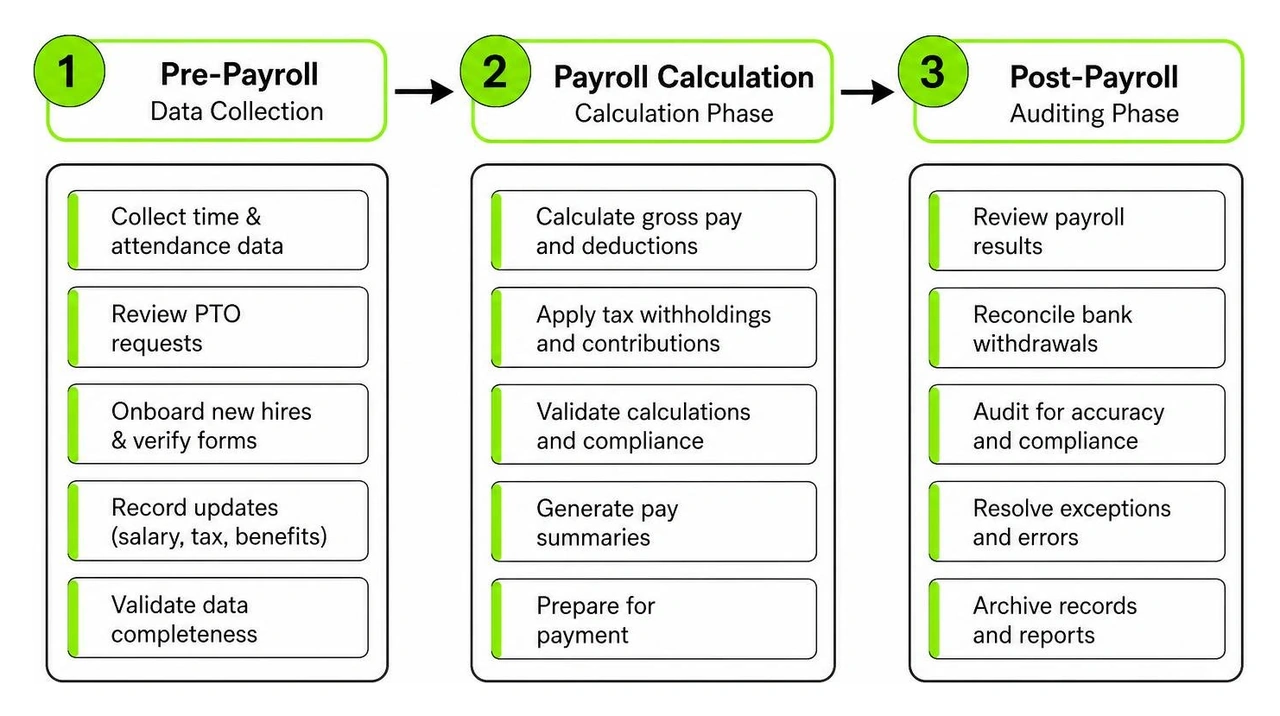
To run payroll reliably every period, organizations break the workflow into three sequential phases. Treating payroll as a structured three phase process ensures that every detail is captured, calculated, and recorded correctly before money moves out of company bank accounts.
Pre Payroll Data Collection
The pre payroll phase involves gathering and verifying all workforce information required for the current pay period. Accuracy in this phase prevents downstream calculation mistakes.
During this stage, HR and payroll administrators compile time tracking logs, verify attendance records, and review approved requests for paid time off. New hires must be fully onboarded with completed Form W-4 tax withholdings, Form I-9 employment eligibility documentation, direct deposit details, and state tax declarations. Additionally, any mid-cycle updates, such as salary adjustments, shift differentials, or address updates across states, must be documented. Gathering complete data upfront protects the business against calculation errors.
Calculation and Tax Withholding
Once all workforce data is collected, the active calculation phase begins. Payroll specialists calculate gross pay for salaried and hourly workers, incorporating any applicable overtime rates, commissions, or discretionary bonuses.
Next, mandatory and voluntary deductions are subtracted from gross earnings. Mandatory deductions include federal income tax withholdings, Social Security and Medicare taxes under FICA rules, and applicable state or local taxes. Voluntary deductions include health insurance premiums, retirement plan contributions, and flexible spending accounts. Court-ordered wage garnishments must also be processed in compliance with specific legal priorities.
Using a reliable paycheck calculator guide allows payroll operators to test net pay outcomes under various tax brackets and overtime scenarios before finalizing the payroll run.
Post Payroll Distribution and Auditing
The final phase takes place after calculations are locked in and approved. Funds are distributed through direct deposit, physical checks, or payroll cards according to statutory pay schedules.
Alongside fund distribution, employers must generate detailed pay stubs for employees. These statements outline gross wages, itemized tax withholdings, benefit subtractions, and net compensation. At the same time, accounting entries are posted to the general ledger to record wage expenses and tax liabilities. Employers must also remit withheld taxes and employer payroll taxes to federal and state agencies, following mandatory schedules like FUTA and state unemployment rules. Reviewing state specific resources such as payroll state guidelines helps guarantee that local remittance schedules are met on time.
Comparing Methods for Managing Payroll
Businesses generally choose among three methods for running payroll, depending on team size, internal expertise, and budget parameters.
Manual Spreadsheet Processing
- Pros Very low initial cash expenditure.
- Cons High risk of manual calculation errors, labor intensive data entry, and no automated compliance updates.
Dedicated Payroll Software
- Pros Automated calculations, built-in employee portals, direct deposit automation, and continuous tax rule updates.
- Cons Requires staff training, system setup, and ongoing software subscription costs.
Outsourced Third-Party Services
- Pros Transfers complex processing workloads to experts, reduces administrative overhead, and provides professional compliance oversight.
- Cons Higher service fees and less immediate control over day to day processing tweaks.
Small business owners often start with manual spreadsheets, but quickly encounter limitations as their workforce grows. Transitioning to automated tools or professional guidance eliminates calculation bottlenecks and protects against penalty risks.
Essential Functions of Payroll Management in HR
Modern payroll management platforms offer essential functions that streamline daily operations for HR administrators and business founders.
Key functions include automated time tracking synchronization, automated tax payment filings, off-cycle payroll support, and employee self-service portals. Self-service portals allow team members to view historical pay stubs, update personal tax forms, download annual W-2 forms, and monitor leave balances directly from their devices. Automating routine tasks cuts administrative hours significantly, letting owners focus on creative growth. A detailed small business payroll guide explains how modern systems reduce administrative hours so business leaders can focus on creative execution.
Cloud Software and System Integration
Cloud-based payroll software has transformed how companies handle workforce management. Modern platforms connect directly with time tracking tools, accounting systems, and health insurance portals via application programming interfaces, commonly known as APIs.
When employee records update in your cloud HR system, changes flow across all integrated platforms automatically. This real-time data sync prevents mismatched records between payroll registers and accounting ledgers. Cloud systems also utilize continuous calculation engines, evaluating payroll obligations in real time rather than waiting for manual end-of-month batch runs. Referencing a comprehensive payroll tax compliance guide ensures your cloud configuration maintains strict alignment with changing statutory guidelines.
Compliance Rules and Preventing Common Mistakes
Maintaining compliance with labor laws and tax regulations is one of the most critical aspects of payroll management. Failure to observe federal and state requirements can result in substantial monetary fines and legal liabilities.
| Processing Risk | Employee Misclassification | Calculation Errors |
|---|---|---|
| Primary Cause | Mislabeling W-2 employees as 1099 contractors | Incorrect overtime rates or faulty math |
| Financial Impact | Unpaid back taxes, interest, and federal fines | Back pay claims, wage penalties, and employee dissatisfaction |
| Regulatory Oversight | Department of Labor and IRS tax audits | State labor boards and Department of Labor wage divisions |
| Prevention Method | Clear worker duties matching legal tests | Automated system sync and payroll audit checklists |
Tax Law Compliance and IRS Penalties
The IRS and state tax agencies enforce strict timelines for remitting payroll taxes and filing quarter-end and year-end tax returns. Penalties for missing these deadlines accumulate rapidly.
Federal regulations require employers to pay FUTA taxes of 6 percent on the first $7,000 paid to each employee per year, alongside federal insurance contributions under FICA rules. The IRS enforces strict failure-to-deposit penalties for late payments. Submitting tax payments even one day past the deadline triggers an immediate 2 percent penalty. Payments delayed by six days face a 5 percent penalty, while payments delayed by sixteen days or more incur a 10 percent penalty on top of the original tax balance owed.
In 2023 alone, the IRS assessed approximately $8.5 billion in civil penalties against U.S. employers for miscalculating or missing tax payments. Consulting US state government guidelines provides valuable context on state specific tax filing duties alongside federal obligations.
Preventing Frequent Processing Errors
Payroll processing errors stem from several common sources, including manual data entry slips, incorrect worker classifications, and poor overtime calculations.
Worker misclassification is a frequent target for regulatory audits. Misclassifying standard W-2 employees as 1099 independent contractors deprives workers of mandatory benefits and leaves the business exposed to back tax penalties. Calculation errors on non-standard overtime rates or shift differentials also lead to wage claims.
Organizations managing remote teams across multiple jurisdictions face additional tax rules. Applying remote team payroll compliance best practices helps prevent multi-state tax withholding errors when workers perform duties across state lines.
Budgeting and Selecting System Solutions
Payroll expense represents the single largest operational cost for most businesses. Managing these costs effectively requires structured budgeting strategies and carefully chosen administrative tools.
Best Practices for Payroll Management in HR
Selecting the right system requires reviewing software functionality, data security standards, and support options against your business model.
When evaluating system solutions, keep these core practices in mind
- Enforce strict role-based access controls to safeguard sensitive wage details.
- Ensure full data encryption for data stored in the cloud and sent across networks.
- Demand automated compliance updates for state and federal tax changes.
- Verify seamless integration with your primary accounting platform.
- Establish clear implementation timelines and live technical support channels.
Following a small business payroll guide 2026 will guide your vendor evaluation process, ensuring your operational investments deliver clear value without bloated software bills.
Forecasting Labor and Operational Costs
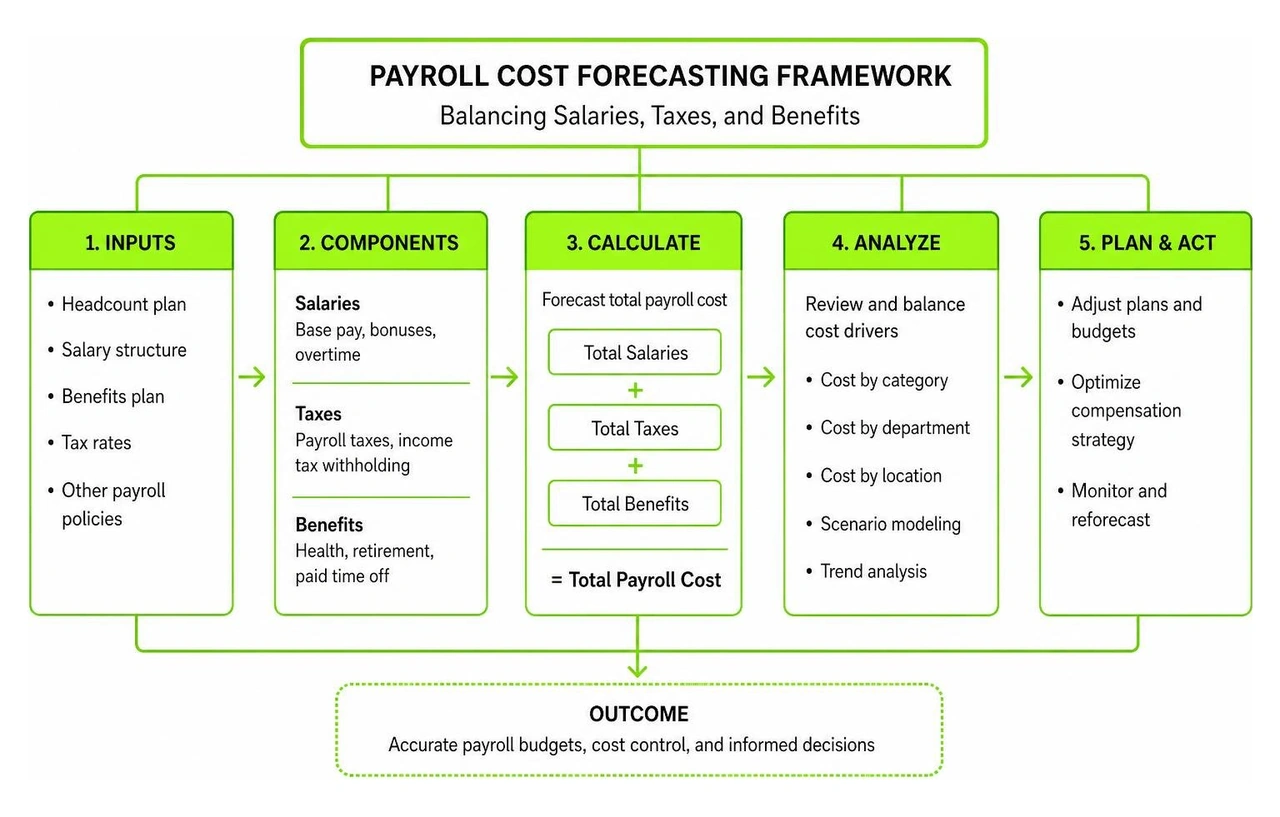
Accurate labor forecasting prevents sudden cash flow shortages and ensures your payroll remains fully funded. Modern financial planning uses dedicated Enterprise Performance Management techniques to project headcount costs, tax growth, and benefit obligations.
Business owners can project payroll costs at either the individual employee level or the broader position level. Position level forecasting plans expenses based on standardized job roles rather than individual named staff members. This simplifies budget variance analysis when staffing levels shift. Reviewing a technical payroll cost planning guide shows how tracking average cost per employee helps maintain sustainable business growth.
At Core Group, we help creative businesses handle these financial complexities with our no-fluff, profit-first playbook. Our financial services build stability and save valuable time, letting you run your business with total confidence backed by our MacBook Pro guarantee.
Frequently Asked Questions About HR Payroll
Is payroll managed under HR or finance
Payroll operates as a cross-functional discipline bridging both human resources and finance. HR usually manages baseline employee records, wage adjustments, policy enforcement, paid leave, and benefit plans. Finance funds payment distributions, handles bank reconciliations, posts ledger entries, and oversees broader expense forecasting. In small businesses, both areas are frequently managed within an integrated HR platform or handled by an expert external financial provider.
How long should employers retain tax and payroll records
Federal regulations enforced by the IRS require businesses to keep employment tax records for at least four years after the tax becomes due or is paid, whichever is later. Basic payroll records such as timesheets, wage rate tables, and work schedules should be retained for at least three years to comply with Department of Labor rules under the Fair Labor Standards Act. Some benefit plan records must be kept even longer for audit compliance.
What happens when tax payments are submitted late
Submitting tax payments late leads to automatic financial penalties from federal and state authorities. The IRS assesses an immediate 2 percent penalty for payments late by one to five days, a 5 percent penalty for payments six to fifteen days late, and a 10 percent penalty for payments sixteen days late or more. In addition to penalties, compound interest accrues on the unpaid balance until the debt is cleared.
Conclusion
Mastering payroll management in hr provides your business with organizational structure, compliance security, and employee trust. By treating payroll as an essential business system rather than a back-office chore, you protect cash flow, lower administrative stress, and keep your staff engaged.
Accurate paychecks reinforce worker loyalty, allowing your business to retain creative talent while avoiding costly regulatory penalties. Implementing structured workflows, modern software, and solid internal controls ensures every payroll run proceeds smoothly.
If you are ready to streamline your payroll operations and achieve financial clarity, explore our comprehensive small business payroll services guide. At Core Group, we bring peace of mind to creative entrepreneurs through proven financial oversight and profit-focused playbooks.