Tax Planning Near Me: A Guide to Saving Money and Staying Sane
Why You Need a Proactive Tax Planner Near Me
If you are looking for a tax planner near me, here is what you need to know right away.
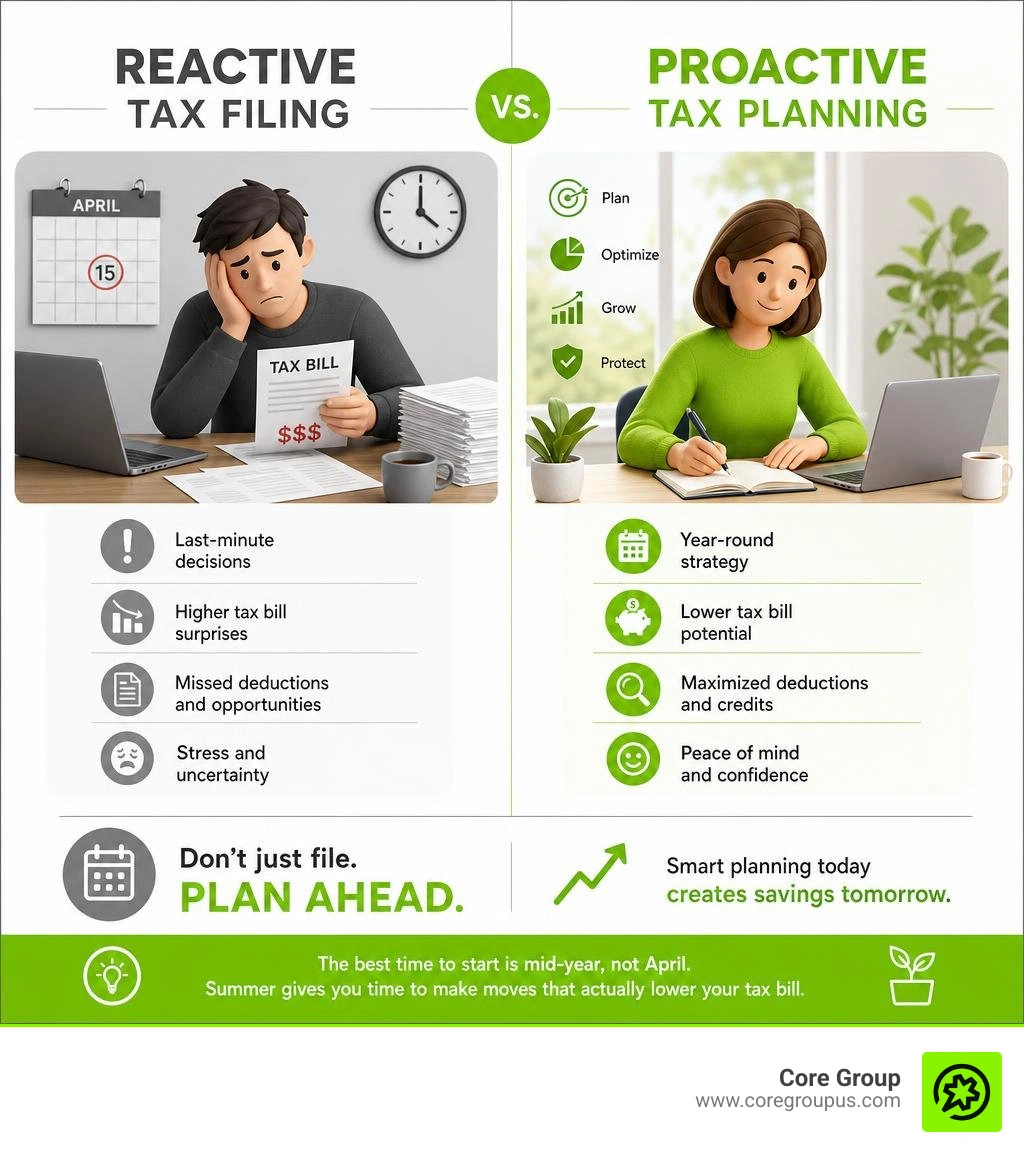
- A tax planner is different from a tax preparer. A preparer files your return. A planner works with you all year to reduce what you owe.
- Look for credentials like CPA (Certified Public Accountant), EA (Enrolled Agent), or CFP (Certified Financial Planner).
- The best time to start is mid-year, not April. Summer gives you time to make moves that actually lower your tax bill.
- Costs vary widely. Simple returns can cost $150 to $395. Complex or high-net-worth planning often starts at $850 and up.
- Use the IRS Directory of Federal Tax Return Preparers to verify credentials before hiring anyone.
Every April, millions of people hand over their documents, pay their bill, and wonder if they could have paid less. The honest answer is probably yes.
Most people do not have a tax problem. They have a planning problem.
If you run a creative business, freelance career, or small production company, your financial life is more complex than a standard W-2. You may have self-employment income, project-based cash flow, business expenses, and no clear picture of what you owe until it is too late to do anything about it.
That is a stressful place to be. And it is exactly the gap a good tax planner fills.
This guide will walk you through everything you need to find the right professional in your area, understand what they actually do, and start saving real money.
Tax planner near me terms you need

When you search for a tax planner near me, you are likely looking for more than just someone to enter numbers into software. You want a partner who can look at your entire financial landscape and guide you toward lower overall tax liability.
A proactive tax planner does not just look backward at what you earned last year. They look forward to help you align your business activities with your long term financial goals.
For many individuals, getting professional personal tax advice is the first step toward building real wealth. When you work with a specialist, you gain access to customized strategies to minimize taxes that are specific to your industry and lifestyle.
This is especially critical if you deal with complex financial situations. If you receive company stock options, own rental properties, or manage multiple revenue streams, a standard tax preparer might miss crucial opportunities to save. A dedicated planner analyzes these moving parts to ensure you do not pay a penny more than you legally owe.
Signs You Have Outgrown DIY Tax Software
In the early days of your career, off the shelf tax software might have been enough. But as your income grows and your life becomes more complex, those basic platforms quickly reveal their limitations.
DIY software is built for simple, predictable tax situations. It cannot offer creative workarounds or warn you about upcoming regulatory changes.
If you are dealing with multi-state filing, self-employment income, or complex business expenses, relying on software is a major risk. For example, tax planning for freelancers requires a deep understanding of estimated quarterly payments, home office deductions, and write-offs that software simply cannot optimize. When your business grows, your tax strategy must grow with it.
Coordinating With Your Existing Financial Team
A great tax planner does not operate in a vacuum. They work collaboratively with your existing financial team, including your financial advisors, bookkeepers, and legal representatives.
This coordination ensures that your investment decisions, estate plans, and business structures are all moving in the same direction. For instance, understanding how firms integrate estate investment tax planning strategies can protect your wealth for future generations while keeping your current portfolio highly liquid and tax-efficient.
By building a bridge between daily bookkeeping and long term wealth management, a tax planner helps you achieve holistic financial health.
The Difference Between Tax Preparation and Tax Planning
To get the most out of your financial team, you must understand the distinction between tax preparation and tax planning.
Tax preparation is a reactive process. It happens once a year, usually between January and April, and focuses on historical reporting. Your preparer takes your past financial data and formats it to comply with IRS guidelines.
Tax planning is a proactive, year-round strategy. It focuses on future outcomes and finding ways to minimize your lifetime tax burden.
| Feature | Tax Preparation | Tax Planning |
|---|---|---|
| Focus | Historical reporting | Forward-looking strategy |
| Timing | Seasonal (tax season) | Year-round |
| Goal | Compliance and filing | Lifetime tax minimization |
| Approach | Reactive | Proactive |
When you invest in tax planning services near me, you are paying for strategic guidance that influences your future financial decisions before they are finalized.
Understanding Professional Credentials and Qualifications
As you search for the right professional, you will encounter various credentials. It is important to know what these titles mean for your business.
A Certified Public Accountant (CPA) is a licensed professional who has passed a rigorous exam and met strict state-specific education and experience requirements. CPAs are excellent for technical accounting, corporate strategy, and audit representation. You can find licensed CPAs in your area through regional networks like the Connecticut Society of CPAs.
An Enrolled Agent (EA) is a tax specialist licensed directly by the federal government. EAs focus entirely on tax law and have unlimited representation rights before the IRS.
A Certified Financial Planner (CFP) focuses on holistic wealth management, helping you balance retirement goals, investments, and insurance.
Many high-quality firms combine these credentials to offer comprehensive services. For example, some specialized practices operate under dual designations to manage both wealth and accounting, such as KCL Wealth Management in California.
Always verify that your chosen professional holds a valid Preparer Tax Identification Number (PTIN) through official databases.
Key Services and Strategies Offered by a Professional Tax Planner

A professional tax planner offers a wide range of services designed to protect your hard-earned income. By utilizing advanced tax planning strategies, they help you discover legal, ethical ways to lower your taxable income.
One of the most common ways to learn how to save on taxes is through intelligent asset location. This involves placing tax-inefficient investments in tax-advantaged accounts while keeping tax-efficient assets in taxable accounts.
Additionally, planners can help you design charitable giving programs, such as donor-advised funds, which allow you to take an immediate tax deduction while distributing the funds to your favorite causes over time.
Strategic Tax Planning and Wealth Preservation for Entrepreneurs
For creative entrepreneurs and small business owners, wealth preservation is just as important as generating revenue. A tax planner helps you design a sustainable profit distribution model that keeps your cash flow healthy.
Rather than leaving your profits sitting in a standard account where they are highly vulnerable to taxes, a planner can help you reinvest those funds strategically. By implementing structured cash flow management systems, you can ensure that your business remains profitable while building long term personal wealth.
Business Tax Optimization and Entity Structuring
Your business entity structure plays a massive role in how much you pay in taxes. Whether you operate as a sole proprietorship, an LLC, an S-Corporation, or a partnership, your structural choice dictates your tax obligations.
Through proactive corporate tax planning and strategy, a planner can help you evaluate if it is time to transition to a new entity type. This is a core component of business tax optimization, allowing you to minimize self-employment taxes and design a highly tax-efficient compensation package for yourself.
By conducting thorough business year end tax planning, you can make structural adjustments before the calendar year closes, saving you thousands of dollars in the process.
How to Find and Vet the Best Local Tax Professionals
Finding a great local professional requires looking beyond basic search results. You should utilize reputable local directories and professional organizations to find vetted experts.
For example, if you are looking for specialists on the West Coast, you might consult the California Society of Tax Consultants to find credentialed professionals. If you are located in other regions, you can look for established regional firms, such as Warren Averett in Alabama, Riggs CPA in Arkansas, Cornerstone Group in Delaware, Haynie and Company in Colorado, Phoenix Tax Guy in Arizona, or Alaska Tax Service in Alaska.
When vetting potential planners, look for client reviews that highlight year-round availability and proactive communication, rather than just seasonal support.
Steps to Choose a Reputable Tax Planner Near Me
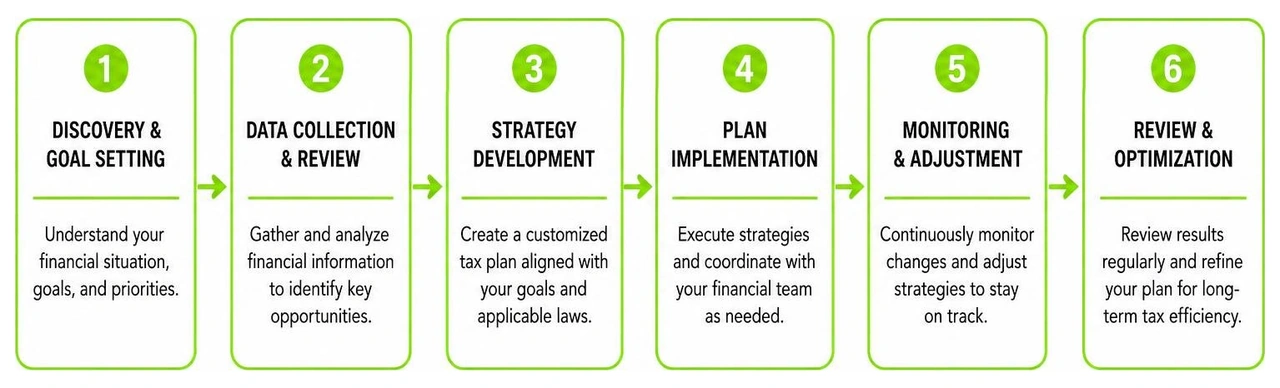
When you begin interviewing potential planners, go in with a clear list of questions. You want to understand their fee structures, how often they communicate, and whether they have experience working with clients in your specific industry.
To ensure you make an informed decision, keep in mind what should be considered in tax planning strategies. Ask them how they handle changing tax laws and what methods they use to keep your financial team aligned.
When is the Best Time of Year to Start Tax Planning
The absolute best time to start tax planning is during the summer. Mid-year reviews give you a clear runway to make adjustments before the December 31 deadline.
If you wait until the April rush, it is already too late to change your financial outcomes for the previous year. Starting early allows you to test different scenarios using advanced tax planning software for individuals, giving you complete control over your final tax bill.
Frequently Asked Questions About Tax Planning
How Much Does a Tax Planner Near Me Cost
Tax planning costs depend on the complexity of your financial situation. On average, standard individual tax preparation services cost $242, with typical prices ranging from $137 to $454.
For very basic filings, taxpayers with only a W-2 form might pay around $50, while those with a W-2 and simple additions like 1099-INT or 1098-E forms typically pay around $150. If you have a rental property, simple small business, or K-1 income, the average cost is around $225. More complex returns involving multiple activities, stock transactions, and small businesses typically average around $395.
However, professional year-round tax planning and advanced advisory packages are priced differently. Highly specialized firms often have minimum prices starting at $850 for basic personal returns, with advanced tax preparation starting at $1,250, and complex or high-net-worth taxes starting at $2,500. Small business tax preparation and planning often starts around $1,000 for sole proprietors and $2,500 for medium-sized businesses.
Do I Still Need a CPA If I Hire a Tax Planner
Yes, these roles are highly complementary. Your tax planner focuses on the long term strategy, while your CPA or preparer ensures compliance and handles the actual filing of your return. Many modern wealth management firms house both specialists under one roof to make collaboration seamless.
Can a Tax Planner Help Minimize My Long Term Tax Burden
Absolutely. By maximizing your deductions, optimizing your business entity structure, and helping you reinvest your profits efficiently, a professional tax planner can save you tens of thousands of dollars over the course of your career.
Conclusion
If you are a creative entrepreneur, freelancer, or small business owner, you do not have to navigate the complexities of tax season alone.
At Core Group, we help creative minds take control of their finances using our customized, no-fluff, profit-first playbook. We handle the numbers, the bookkeeping, and the long term strategy so you can focus entirely on what you do best, creating.
We are so confident in our ability to streamline your financial life that we back our services with our signature MacBook Pro guarantee.
Are you ready to experience true financial peace of mind? Get started with professional tax planning today and let us help you build a highly profitable, tax-efficient business.